
Downtime planning
Loaner Scope Coverage and How to Plan Around a Scope Repair
Ask us about loaner coverage when you request your quote. Availability depends on the device and what is on the shelf, so the more useful conversation is usually about how to keep cases running while yours is on the bench.
- Ask about loaner coverage with your quote
- Rotation planning so one repair stops nothing
- Batch several devices onto one collection
- Free evaluation and a written quote first
Get a Free Repair Quote
Tell us what failed and we will send a written quote before any work begins. No charge for the evaluation, and no purchase order needed to get one.
Quote before any work
You approve a written quote before a technician touches the scope.
Free evaluation
We diagnose the failure and price the repair at no charge, even if you decline.
We come and get it
Pickup and delivery across Southern California, mail-in service everywhere else.
Independent, not the OEM
All major manufacturers serviced, without OEM exchange pricing.
Keep the schedule
Six Ways to Protect the Schedule During a Scope Repair
Most downtime is caused by how repairs are sequenced rather than by how long any one repair takes. These are the choices that actually move the schedule.
Send the bottleneck device first
If one scope type is holding up a room, it goes first even when another device looks worse. Sequence repairs by what the schedule needs back, not by which unit is most damaged.
Batch the rest onto one collection
Devices that are out of rotation but not blocking a case can travel together. One pickup, one set of paperwork, and no second trip a fortnight later.
Have the whole chain evaluated
Send the coupler, camera head, and light cable alongside the scope when the complaint is about the picture. Diagnosing the wrong component costs more schedule than the repair does.
Know what is worth rebuilding
A device that has been rebuilt repeatedly and is failing again is a planning problem, not a repair problem. The written evaluation tells you which units to stop budgeting around.
Use pickup rather than packing
Across Southern California a courier collects the device, which removes the packing step where in-transit damage tends to happen and gets the unit onto the bench sooner.
Ask about coverage early
Raise loaner coverage when you request the quote rather than after the device ships. What we can offer depends on the device and what is available at the time.
What We Can and Cannot Promise About Loaner Scopes
We will not tell you a loaner is waiting when we do not know that it is. Coverage depends on the device type, the platform, and what is on the shelf the week you call, and a promise made in a sales conversation is worth nothing to the manager who is short a scope on a Tuesday morning.
So the honest answer is: ask. When you request a quote, say which device is going out and whether a gap in coverage would move cases. We will tell you what we can do for that specific unit rather than pointing at a program page.
Everything else on this page is about the part we can influence, which is how repairs are sequenced. Start from the list of equipment we service if you are working out what to send.
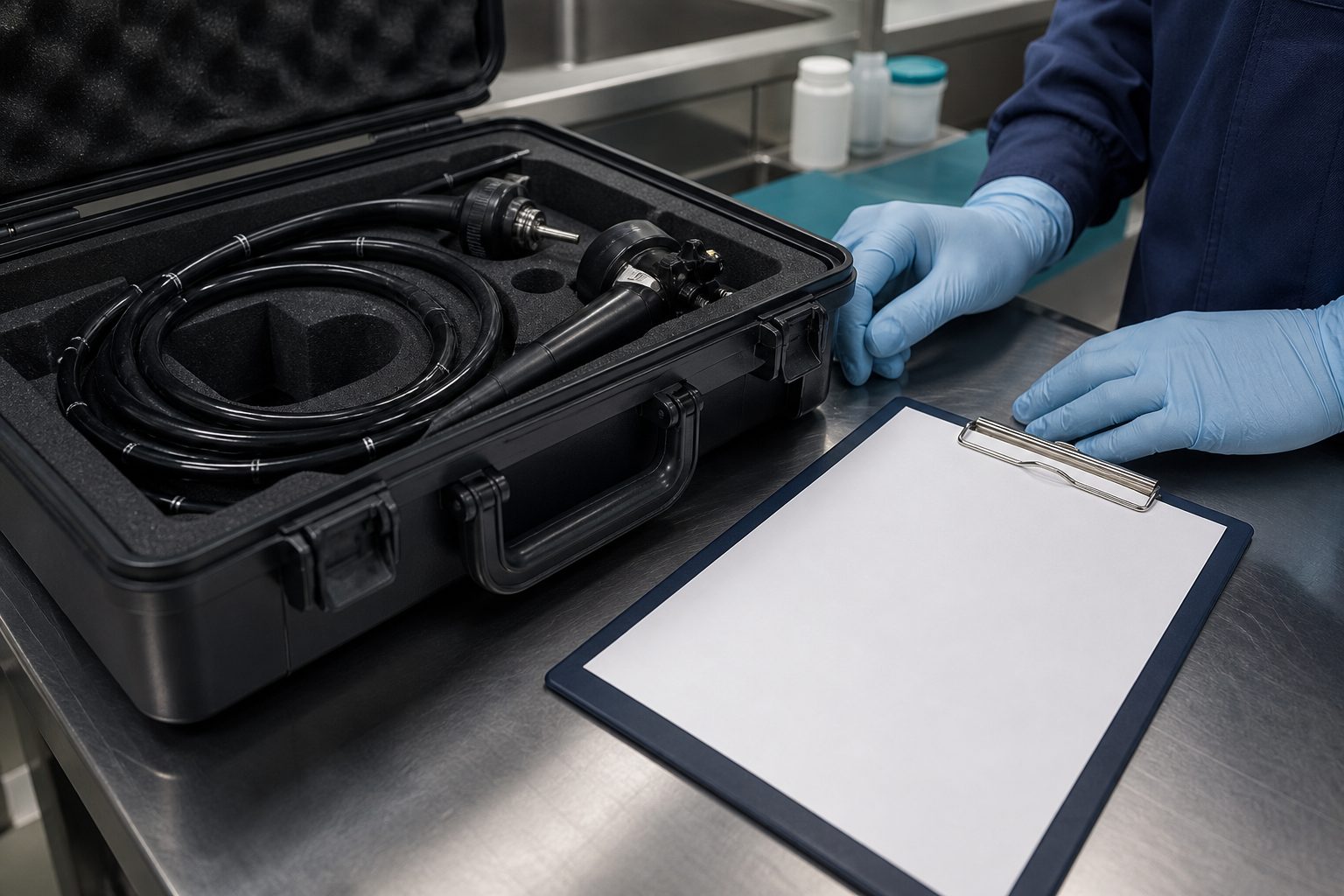
Planning Scope Rotation So One Repair Does Not Stop a Room
Departments rarely run short because a repair took too long. They run short because three devices went down in the same month and all three were sent at once, or because nobody noticed a unit was marginal until it failed mid-session.
The fix is unglamorous. Track which devices are marginal rather than only which are broken, and move the marginal ones through in quiet weeks. A scope with a slow channel or a bending section that is getting stiff is a scheduling choice today and an emergency next quarter.
Flexible units in high-volume GI rooms are usually the constraint, which is why flexible endoscope service tends to drive the rotation plan for the whole department.
Which Scope Repair to Send First When Several Are Down
Send the device the schedule cannot work around, then the device closest to becoming unrepairable, then everything else. Those are usually different units, and the second one is the one departments get wrong.
Anything with suspected fluid inside belongs in the second category regardless of how the picture looks. Waiting turns a channel repair into a rebuild, and the reasoning is set out on the fluid invasion page and the page on failed pressure tests.
If the room is held up by instrument sets rather than scopes, a scheduled visit may clear it without anything leaving the building. Ask about on-site instrument work when you call.
How it works
How a Scope Repair Moves Through Our Shop
Four steps from the first call to the return, with the decision point sitting with you rather than with us.
Tell us what failed
Send the manufacturer, model, and what you are seeing. A photo of the damage helps but is not required.
We collect the scope
Courier pickup across Southern California, or ship the device in to our bench from anywhere in the country.
You get a written quote
We evaluate the device, document the failure, and price the repair. Nothing proceeds until you approve it.
Repaired, tested, returned
The device is repaired, leak and function tested, and returned with documentation for your records.
Questions we get
Questions About Loaner Scopes and Repair Downtime
Do you guarantee a loaner while our scope is being repaired?
How do we reduce downtime if no loaner is available?
Can we send several devices at once?
How do we know which of our scopes are about to fail?
Does asking about loaner coverage change the quote?
Ask About Loaner Scope Options With Your Quote
Tell us the device, the symptom, and what your schedule looks like. We will quote the repair and tell you honestly what coverage we can offer.
Monday to Friday, 8:00 AM to 5:00 PM Pacific
Saturday and Sunday, closed
Mail-in repairs received any day
Serving Southern California with pickup and delivery, and the rest of the country by mail-in.