
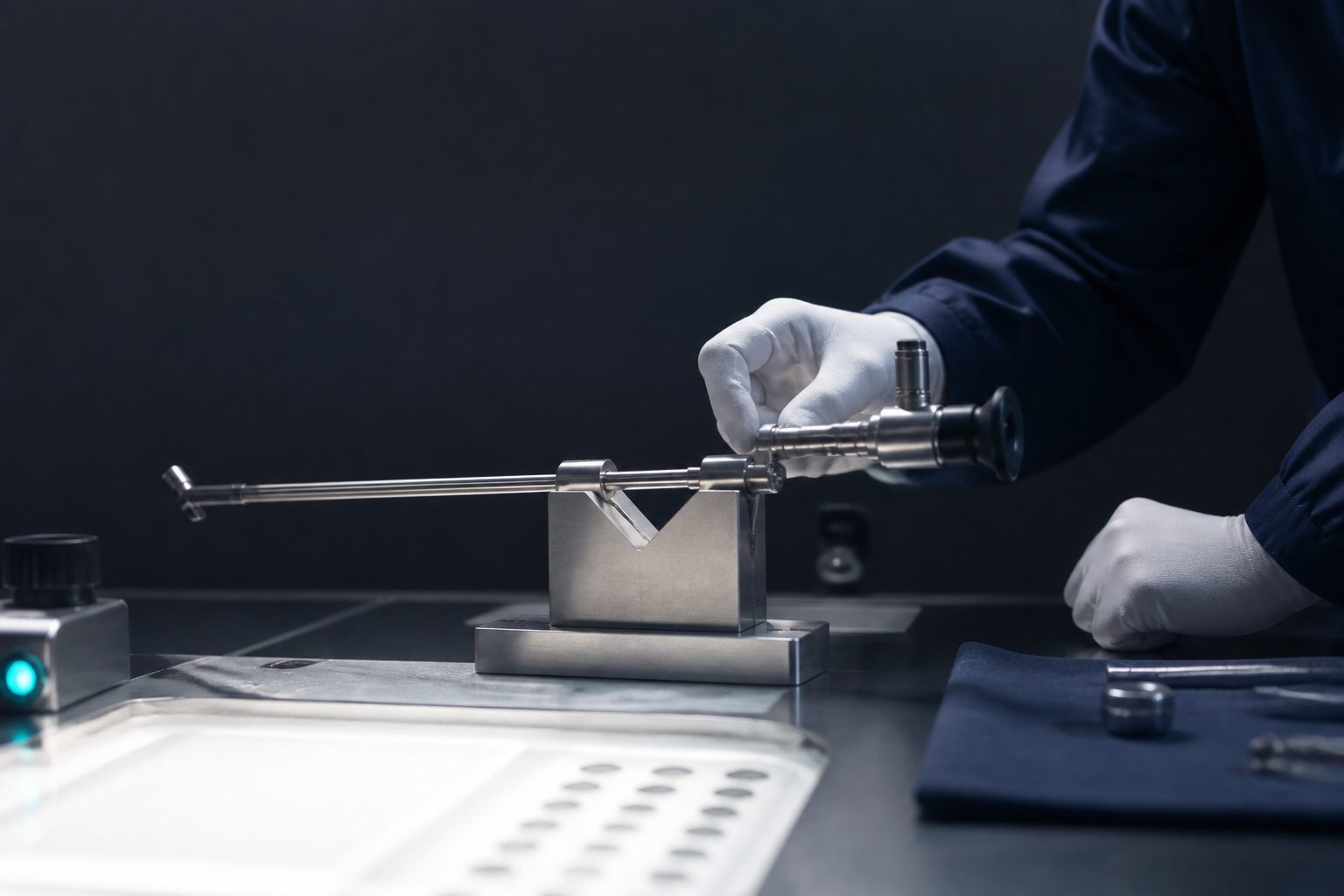
Gynecology
Hysteroscope Repair for Diagnostic and Operative Optics
Two millimeters of glass column inside a sheath that gets assembled and broken down several times a day. We rebuild diagnostic and operative hysteroscope optics, restore autoclave seals, and quote the work in writing before anything is opened.
- Rod lens rebuilds on 2.9 mm and 4 mm telescopes
- Sheath, obturator, and bridge fit correction
- Seal restoration after continuous flow fluid ingress
- Free evaluation and a written quote before work
Get a Free Repair Quote
Tell us what failed and we will send a written quote before any work begins. No charge for the evaluation, and no purchase order needed to get one.
Quote before any work
You approve a written quote before a technician touches the scope.
Free evaluation
We diagnose the failure and price the repair at no charge, even if you decline.
We come and get it
Pickup and delivery across Southern California, mail-in service everywhere else.
Independent, not the OEM
All major manufacturers serviced, without OEM exchange pricing.
By symptom
Hysteroscope Optics Failures We See in Gynecology
What the nurse wrote on the tag, and the physical fault sitting behind it inside a sealed tube barely wider than a pencil lead.
Moisture inside the optical train
Distension fluid or steam has passed a worn seal and settled on the internal glass, and there is no external surface that cleaning can reach. On a telescope this narrow the haze covers most of the field quickly, so it is usually reported within a case or two of the seal giving up.
Cracked element in a narrow relay
The glass column in a 2.9 mm telescope is a few millimeters across, so a small flex during sheath assembly is enough to fracture an element. The lost field appears as a crescent or wedge, and the fix is a relay rebuild rather than anything that can be done in your department.
Bent shaft or distorted sheath
A telescope that no longer slides freely has usually been bowed, or the sheath itself has been bent against a bridge. Forcing the fit from that point on cracks glass. We straighten and check the pair together, because a scope that fits a straight sheath may still bind in yours.
Failed eyepiece seal after fluid exposure
Continuous flow sets keep the telescope wet for the length of a case, so the eyepiece and light post seals see more fluid pressure here than on most rigid scopes. Once they fail, fluid tracks along the relay and the scope needs drying, internal service, and new seals before it returns.
Broken illumination fibers
A small telescope carries a small fiber bundle, so it has less redundancy than a laparoscope and loses noticeable brightness after fewer broken strands. Bending at the light post is the usual cause, and the bundle can be rebuilt rather than the scope replaced.
Distal window damage
Operative sets pass scissors, graspers, and bipolar electrodes within a millimeter of the window, and resectoscope style loops are unforgiving of a misaligned working channel. Each chip scatters light into the picture, and the window is replaced and resealed as one job.
Why a Small Diameter Optics Column Breaks So Easily
A hysteroscope is one of the narrowest rod lens telescopes in the hospital. Inside a shaft of 2.9 mm or 4 mm sits a column of glass elements, an illumination bundle wrapped around it, and seals at both ends that have to hold against steam and against distension fluid. There is no slack anywhere in that assembly. What a laparoscope absorbs as a slight bow, a hysteroscope absorbs as a fracture.
That changes where the damage comes from. These devices rarely get dropped in the field, because the working length is short and the surgeon has close control. They break during handling, and specifically during assembly and breakdown of the sheath, when the telescope is being pushed through a bridge that is not quite lined up or pulled out against a lock that has not been released. The general behavior of rod lens devices is covered on the rigid telescope repair overview.
It also changes how the failure presents. On a wide telescope, one cracked element takes a slice out of the picture and the surgeon works around it. On a narrow one, the same crack can compromise most of the usable field, which is why hysteroscope faults tend to be reported the day they happen rather than months later.
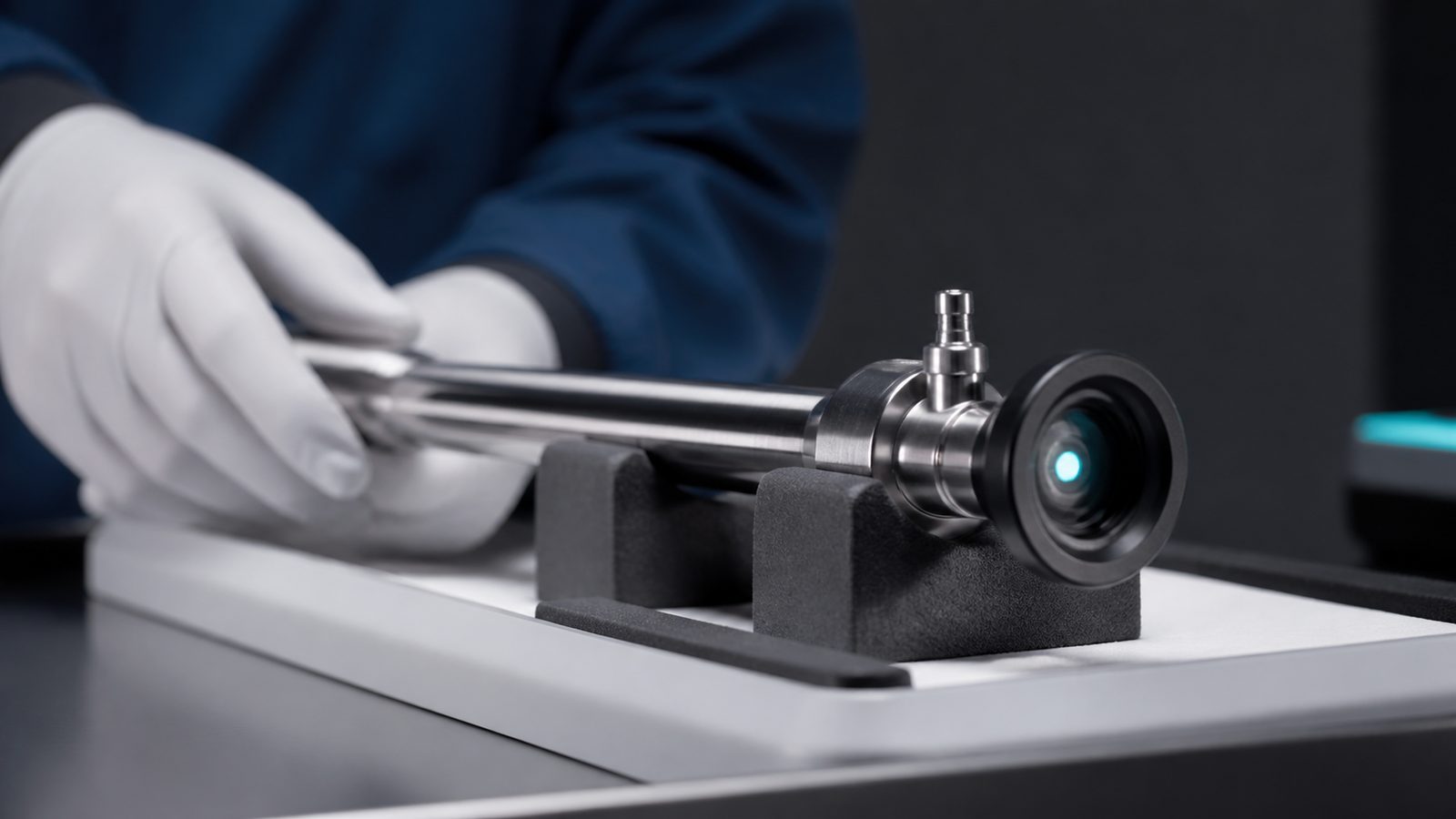
Sheath Assembly Damage on a Hysteroscopy Telescope
Ask your gynecology team how many times a day a diagnostic set is put together and taken apart, then compare that with how often a laparoscope leaves its coupler. The difference is the whole story. Every assembly is an opportunity to load the telescope sideways, and the parts that guide it, the bridge, the inflow and outflow sheaths, and the obturator, wear and drift out of true over time.
When a sheath is slightly out of shape, the scope no longer enters cleanly, and the natural response is a little more force. That force lands on a glass column. We check the telescope and the sheath as a pair for exactly this reason, because returning a rebuilt scope into a distorted sheath buys a few weeks at most.
Office hysteroscopy compounds it. Smaller rooms, fewer sets, tighter turnover, and a device that gets reprocessed between back to back patients. If the scope also travels between an office suite and a main OR, the transport case matters as much as the technique, and a case with a broken insert has caused more distal lens damage than most departments realize.
Fluid Ingress and What It Does to Hysteroscope Optics
Continuous flow means the telescope sits in warm distension fluid under pressure for the length of the procedure, then goes into a wash, then into a steam cycle. Very few rigid scopes see that combination. The seals at the eyepiece and the light post are the weak points, and they fail from thermal cycling long before anything visible happens to the exterior.
Once fluid is inside, it does not evaporate on its own. It condenses on the internal glass every time the scope cools, the image turns hazy or yellow, and continued autoclaving begins to etch the surfaces. That progression is the rigid version of what we describe on the fluid invasion repair page, and it has the same rule: pull the device now rather than after the next load.
There is no leak test for a rigid telescope at the point of assembly, so the check is visual. Hold it up to a bright surface and look through the eyepiece. Clear and colorless is fine. A warm cast, a fog, or a visible droplet means the seals have already gone, and the scope should not go back on the tray.
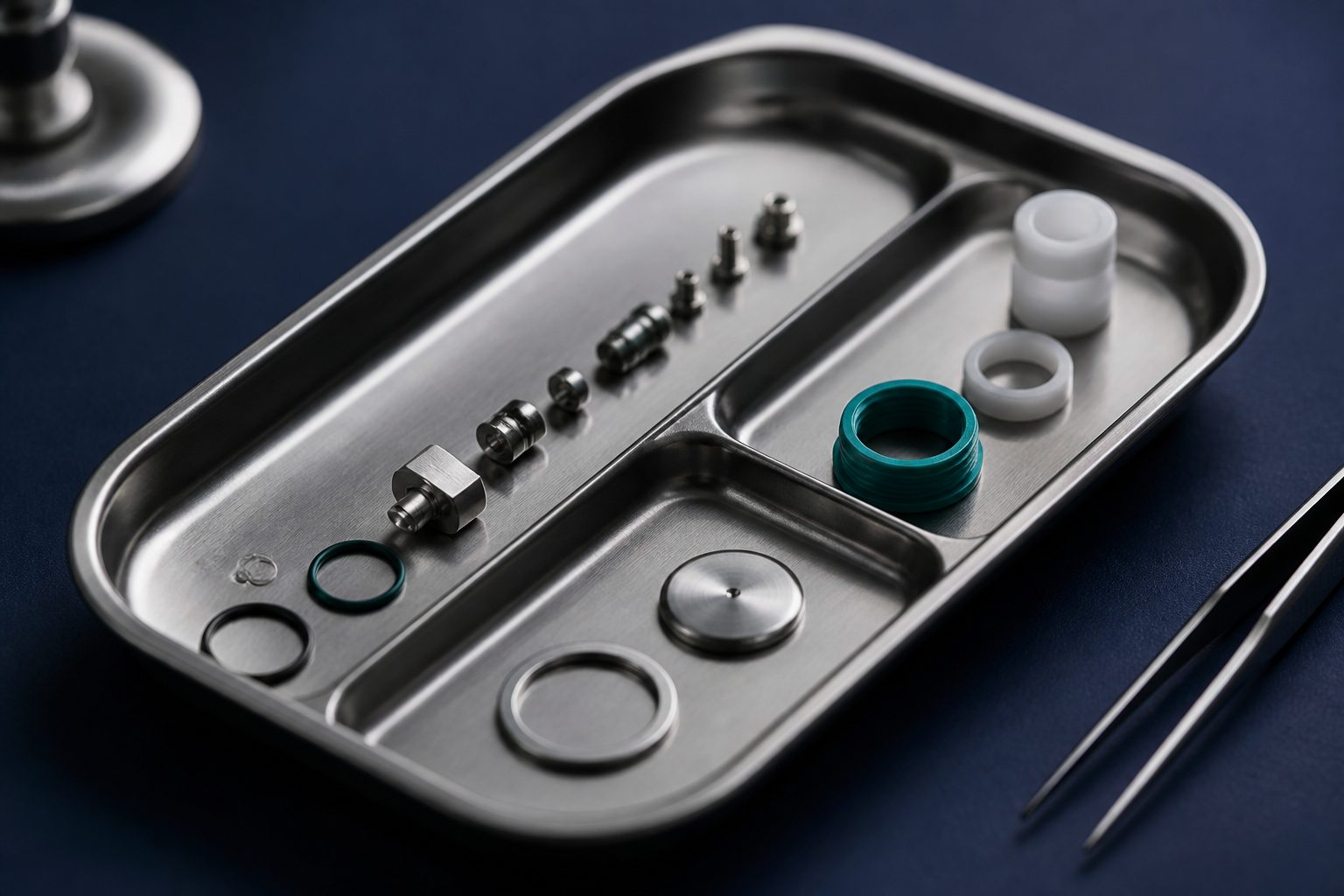
Rebuilding Beats Replacing on Most Hysteroscope Service Calls
Narrow telescopes are treated as consumables in a lot of departments, partly because they fail more often and partly because nobody enjoys writing a repair order for a device that will probably come back. That reasoning skips the diagnosis. A scope with one cracked element and sound seals is a rebuild, and the returned device is the same asset already recorded on your tray sheets.
The evaluation is also where a pattern becomes visible. If three telescopes from the same set show damage at the same point along the shaft, the problem is the sheath, the bridge, or the storage tray, and replacing scopes will not touch it. We report what we see on every device, including the parts that were not part of the complaint.
The gynecology and urology lines share most of their optical construction, so the same bench work applies to Richard Wolf telescopes and sheaths and to the Karl Storz rigid range. Facilities usually send the hysteroscopy inventory alongside the urology cystoscopy optics and any resectoscope working elements in the same pickup. We are an independent shop and are not affiliated with or authorized by any manufacturer.
How it works
How Hysteroscope Service Works, From Pickup to Return
Four steps, and you decide what gets repaired after you have seen the evaluation in writing.
Tell us what failed
Send the manufacturer, model, and what you are seeing. A photo of the damage helps but is not required.
We collect the scope
Courier pickup across Southern California, or ship the device in to our bench from anywhere in the country.
You get a written quote
We evaluate the device, document the failure, and price the repair. Nothing proceeds until you approve it.
Repaired, tested, returned
The device is repaired, leak and function tested, and returned with documentation for your records.
Questions we get
Hysteroscope Repair Questions From SPD and OR Teams
Our 2.9 mm telescope has a hazy image after a few months. Is it worth repairing?
Should we send the sheath and bridge with the scope?
Can you tell whether the damage came from handling or from a single event?
The image is dim but the light source is at full. What should we check?
Do you service office hysteroscopy sets as well as hospital ORs?
Other Rigid Scope Repair Pages in This Section
Same rod lens architecture, same steam exposure, different anatomy and a different way of getting damaged.
Get a Free Quote on Your Hysteroscope Optics Repair
Tell us the manufacturer, the diameter, the view angle, and whether it is a diagnostic or an operative set. We will price the repair before anyone opens it.
Monday to Friday, 8:00 AM to 5:00 PM Pacific
Saturday and Sunday, closed
Mail-in repairs received any day
Serving Southern California with pickup and delivery, and the rest of the country by mail-in.