
Orthopedics
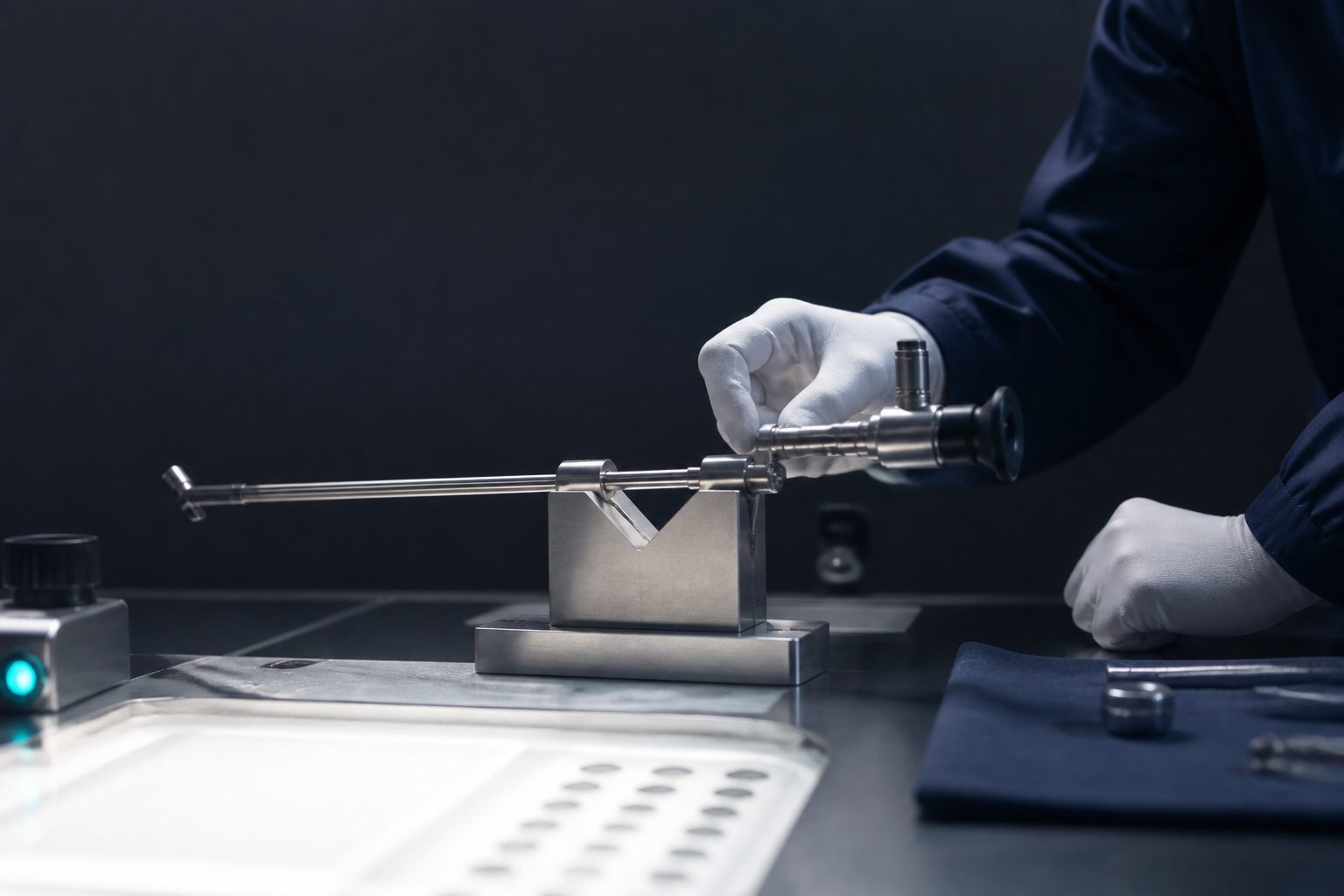
Arthroscope Repair for 30 and 70 Degree Angled Optics
Bent shafts, fractured rod lenses, and the crescent of missing image that follows. We rebuild arthroscope optics from 2.7 mm diagnostic telescopes up to 4 mm 30 and 70 degree scopes, and we quote the work in writing first.
- Rod lens relay rebuilds on 30 and 70 degree optics
- Shaft straightening and distal window replacement
- Autoclave seal restoration after moisture ingress
- Free evaluation and a written quote before work
Get a Free Repair Quote
Tell us what failed and we will send a written quote before any work begins. No charge for the evaluation, and no purchase order needed to get one.
Quote before any work
You approve a written quote before a technician touches the scope.
Free evaluation
We diagnose the failure and price the repair at no charge, even if you decline.
We come and get it
Pickup and delivery across Southern California, mail-in service everywhere else.
Independent, not the OEM
All major manufacturers serviced, without OEM exchange pricing.
By symptom
Arthroscope Optics Failures We See From Orthopedic ORs
Find the symptom your staff wrote on the tag. Each one has a physical cause inside a sealed tube, and almost none of them are solved by cleaning.
Fractured rod lens in the relay
One glass element in the relay has cracked or shifted, so part of the light path is blocked and the round field loses a curved slice along one edge. The relay has to be opened and the damaged element replaced, because the rest of the image stays sharp and cleaning changes nothing.
Bent telescope shaft from levering
Using the scope to open a tight joint space bends the outer tube by a fraction of a millimeter, which is more than the glass inside will tolerate. We straighten the shaft and inspect every element in the stack, since a bend that looks minor usually comes with at least one cracked lens.
Moisture inside the optical train
This is almost never a dirty lens. Steam has worked past a tired eyepiece or window seal and condensed on internal glass surfaces, which reads as a yellow cast or a soft haze that no wipe removes. The scope is dried, the internal surfaces are serviced, and the seals are replaced.
Broken illumination fibers
The fiber bundle that rings the optical relay snaps strand by strand from bending and repeated handling, and the loss is gradual enough that nobody notices until a case runs dark. We count the dead strands, rebuild the bundle, and check the light post and cable before blaming the telescope.
Displaced prism or loose eyepiece
A 30 or 70 degree scope depends on a distal prism sitting at a fixed angle and an eyepiece that does not creep. An impact against a cannula or a drop onto the back table moves one of them, so the horizon tilts or the field swings when the scope is rotated in the sheath.
Distal window damage
Shaver blades, burrs, and metal cannulae chip the distal window, and each chip scatters light into the image as flare. We replace the window and reseal the tip, which restores contrast that surgeons had already written off as normal wear.
What Bending Does Inside an Arthroscope Optics Train
A rigid arthroscope is a sealed tube, not an assembly you can open in your department. Inside it sits a relay of glass rod lenses held in exact position, an illumination fiber bundle wrapped around that relay, and an eyepiece assembly sealed against steam. None of it tolerates flexing. When a scope is used as a lever to open a tight compartment, or when it is loaded against the cannula while the surgeon changes portals, the outer shaft bows a fraction of a millimeter and the glass inside does not bow with it.
That is where the crescent comes from. A fractured element blocks part of the light path, so the circular field loses a curved slice along one edge while the center stays sharp enough that the case finishes. Staff usually record it as a dirty lens and run the scope through reprocessing twice before anyone accepts that cleaning cannot reach it. The relay has to come apart. We describe the same physics across the whole family on the rigid telescope repair overview.
Diameter decides how forgiving the device is. A 4 mm 30 degree scope survives a fair amount of side loading. A 2.7 mm diagnostic telescope used in small joints has so little wall thickness that the same handling bends it permanently, which is why wrist and ankle scopes come back for optical work far more often than their case volume suggests.
Rod Lens Repair Weighed Against Buying a New Telescope
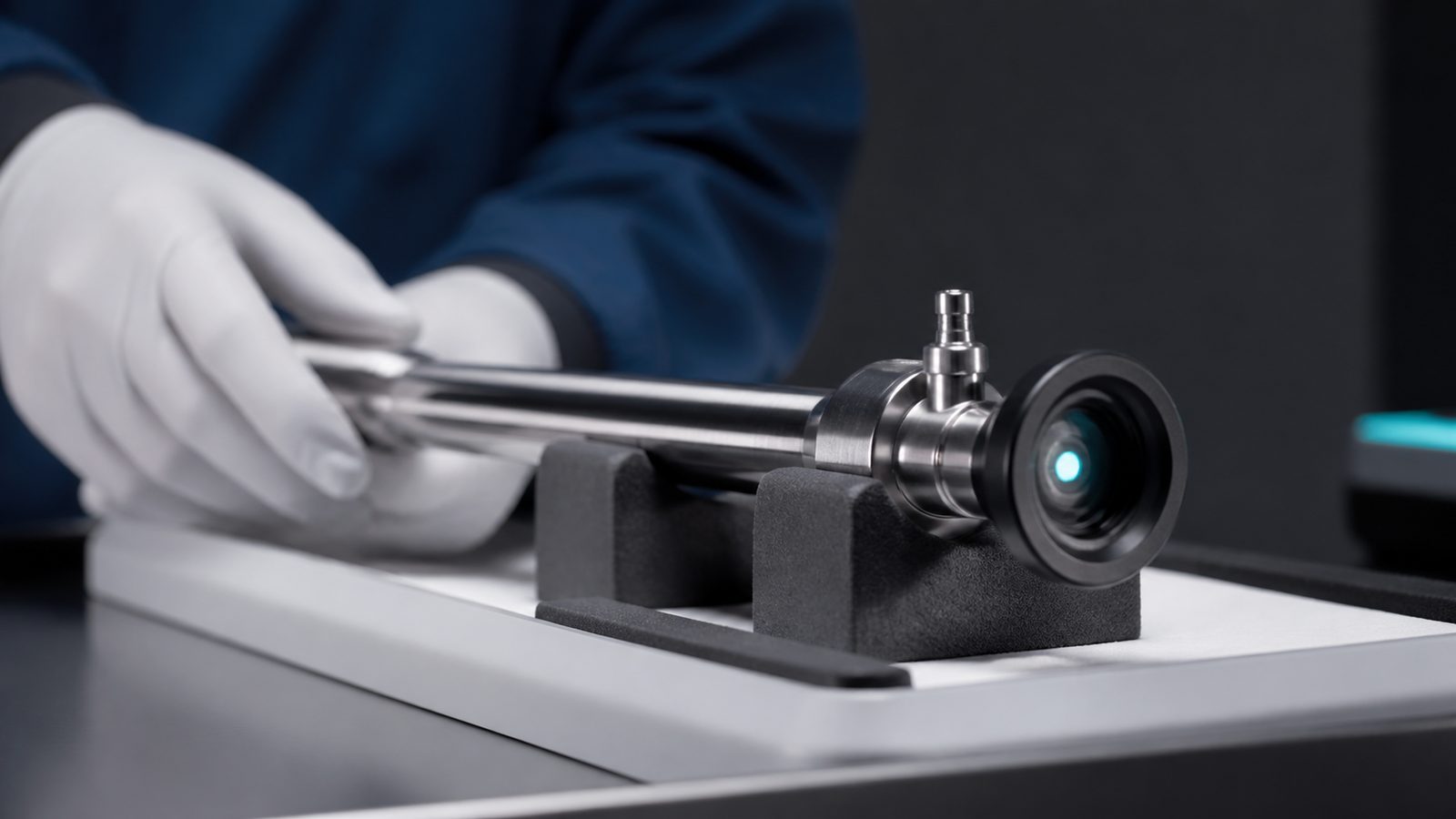
The reflex when an image degrades is to pull a spare and put the damaged scope on a replacement list. That is often the wrong economic call. A telescope with one cracked element and sound seals is a rebuild, and the device that comes back is the same asset with the same serial number in your inventory rather than a new capital line and a new set of paperwork.
It is also worth knowing what actually failed. A scope that has been bent twice in six months is telling you something about portal technique or about how the set is being handled between the field and the back table, and a replacement scope walks into the same conditions. We report what we find on every device, including the damage nobody asked us about.
Optical rebuilds are practical across the arthroscopy lines your ORs already run, including Stryker arthroscopes and camera systems, Dyonics telescopes from Smith and Nephew, and the Karl Storz rigid range. We are an independent shop and are not affiliated with or authorized by any manufacturer.
What Autoclave Cycling Costs an Arthroscope Service Life
Every steam cycle takes a sealed instrument from room temperature to well above the boiling point and back, and the seals at the eyepiece, the light post, and the distal window expand and contract with it. They hold for hundreds of cycles and then they stop holding. Nothing dramatic happens on the day it fails. Moisture works in slowly, and the first sign is an image that has gone slightly warm in color.
By the time the haze is obvious there is water sitting on internal glass, and if the scope keeps cycling the surfaces begin to etch. That is the difference between a seal replacement and a full relay rebuild, and it is why a yellowing image deserves the same urgency your team already gives a flexible scope that shows signs of fluid invasion. Take it out of rotation before the next load.
Rigid telescopes are not leak tested the way flexible scopes are, but the same principle applies: a breach found early is cheap. If your department already runs leak testing on the flexible inventory, adding a quick optical check on rigid scopes at the point of assembly catches most of this before a surgeon has to.
When an Arthroscopy Scope Problem Is the Camera or the Cable
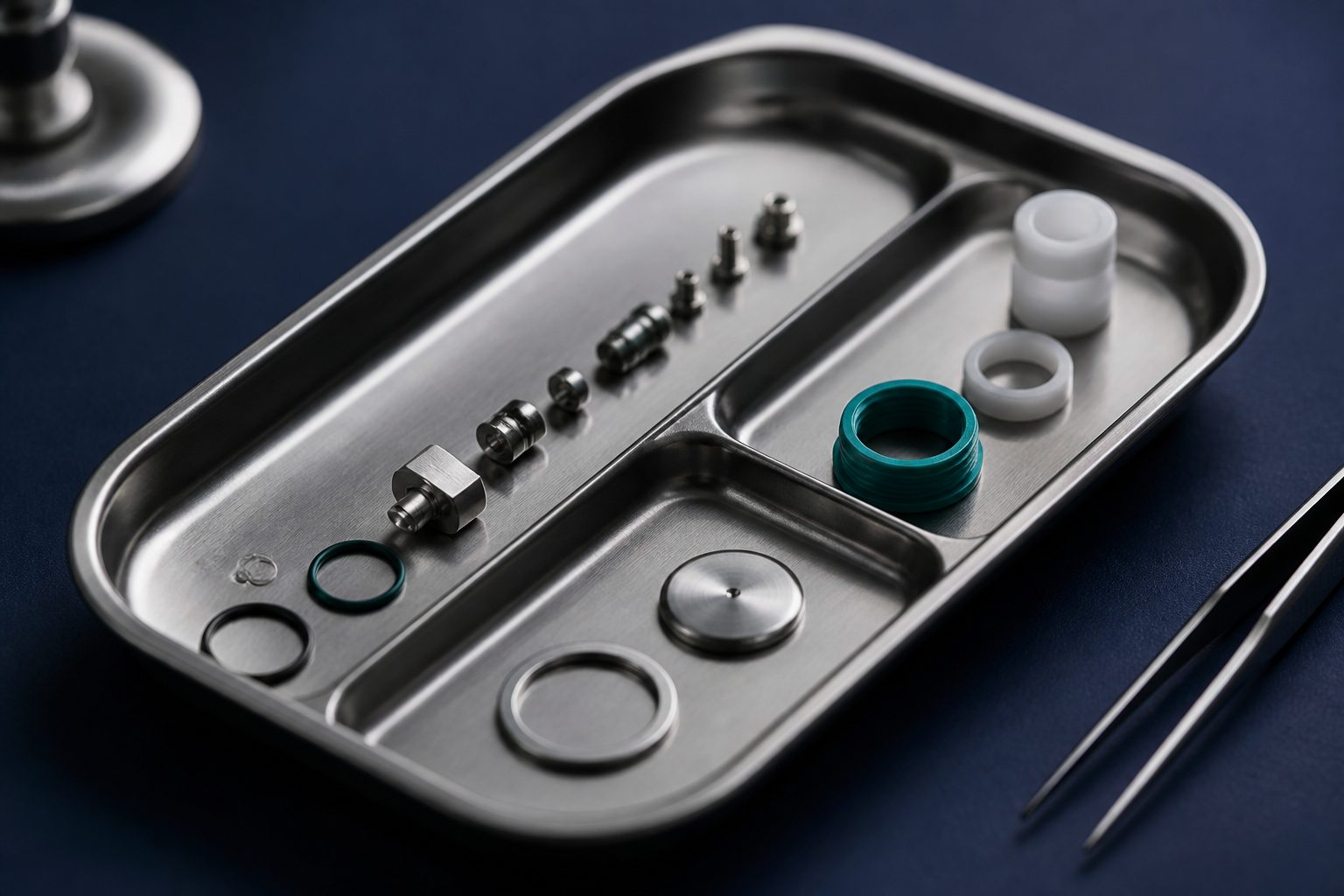
A dim or washed out picture gets blamed on the telescope more often than it should. The image chain has four parts, and three of them are cheaper to fix than the scope. Before condemning the optics, swap the light cable, then the coupler, then the camera head, and see which change moves the picture.
Light cables lose fibers steadily and quietly, and a cable at half transmission still lights a room well enough that nobody suspects it. That is a fiber optic cable problem rather than a scope problem, and the same is true of a color shift that turns out to be a camera head with a failing sensor seal. Where the fibers inside the telescope itself are the fault, that is illumination bundle work, and we can tell which it is on the bench in minutes.
Departments that run several rigid specialties tend to send everything together. Orthopedics arrives alongside the general surgery laparoscope inventory and the ENT clinic's sinus telescopes, which is one pickup, one quote sheet, and one set of return paperwork.
How it works
How Arthroscope Service Works, From Pickup to Return
Four steps, and the decision about what gets fixed stays with your department rather than with us.
Tell us what failed
Send the manufacturer, model, and what you are seeing. A photo of the damage helps but is not required.
We collect the scope
Courier pickup across Southern California, or ship the device in to our bench from anywhere in the country.
You get a written quote
We evaluate the device, document the failure, and price the repair. Nothing proceeds until you approve it.
Repaired, tested, returned
The device is repaired, leak and function tested, and returned with documentation for your records.
Questions we get
Arthroscope Repair Questions From SPD and OR Teams
Can a bent arthroscope be straightened, or is it scrap?
The image is yellow. Is that a lens we can clean?
Do you work on 2.7 mm small joint scopes as well as 4 mm?
How do we tell whether the problem is the scope or the camera?
Will you look at the whole arthroscopy set, not just the telescope?
Other Rigid Scope Repair Pages in This Section
The same optical relay, the same steam exposure, a different specialty and a different set of handling risks.
Get a Free Quote on Your Arthroscope Optics Repair
Tell us the manufacturer, the diameter, the view angle, and what the image looks like. We will tell you what it costs to fix before anyone opens it.
Monday to Friday, 8:00 AM to 5:00 PM Pacific
Saturday and Sunday, closed
Mail-in repairs received any day
Serving Southern California with pickup and delivery, and the rest of the country by mail-in.