
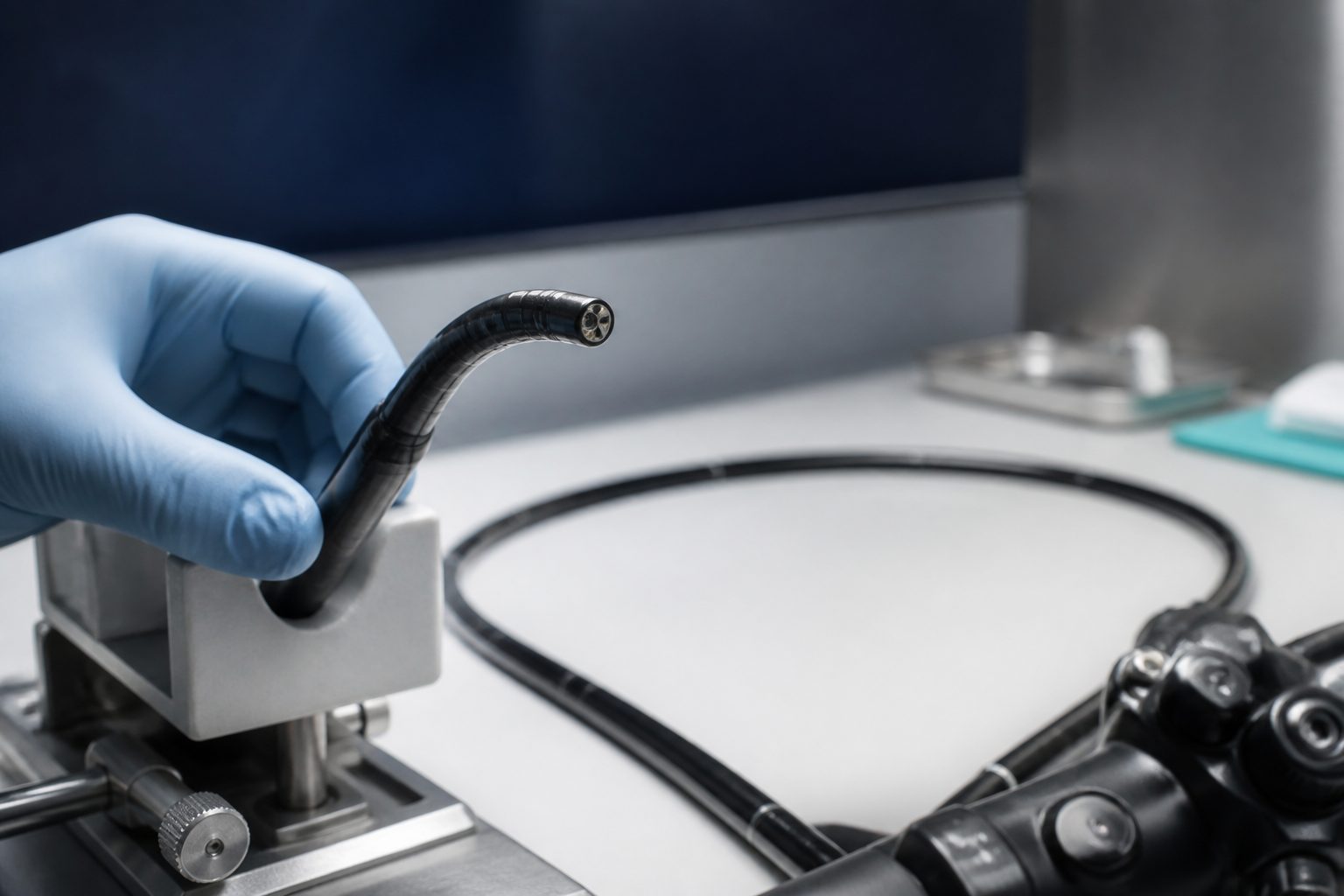
Gastroenterology
Duodenoscope Repair, Elevator Mechanism and Distal Cap Service
No other flexible scope carries the same reprocessing exposure as a duodenoscope. We service the elevator mechanism, the elevator wire channel, the distal cap, and the side viewing optics, with a written quote before any work begins.
- Elevator mechanism and lever service
- Elevator wire channel replacement
- Distal cap and forceps raiser work
- Side viewing optics and prism repair
Get a Free Repair Quote
Tell us what failed and we will send a written quote before any work begins. No charge for the evaluation, and no purchase order needed to get one.
Quote before any work
You approve a written quote before a technician touches the scope.
Free evaluation
We diagnose the failure and price the repair at no charge, even if you decline.
We come and get it
Pickup and delivery across Southern California, mail-in service everywhere else.
Independent, not the OEM
All major manufacturers serviced, without OEM exchange pricing.
By symptom
Duodenoscope Failures That Matter Most in Reprocessing
On an ERCP scope, a mechanical fault and a cleaning problem are frequently the same event. These six cover the bulk of what arrives here.
Worn or stretched elevator wire
The elevator wire runs the length of the scope and loses travel as it stretches and frays. The lever moves but the raiser stops short, so accessories will not cannulate at the angle the case needs. The wire and its sheath are replaced together.
Debris packed in the elevator recess
The recess under the forceps raiser is the hardest space on any scope to clean. Dried soil and mineral deposit bind the pivot until the lever loses its smooth range. The assembly is disassembled, cleaned, inspected, and worn parts are replaced.
Damaged distal cap or sealing edge
The cap seals the elevator recess and takes handling damage during cleaning and transport. A cap that no longer seats leaves the mechanism open to fluid and soil, so it is replaced and the seating surface is checked for wear.
Breach at the elevator wire channel
The elevator wire channel is a common and easily missed leak path on a side viewing scope. Pressure holds long enough to pass a quick hand test and then fails on the bench. The channel is replaced and the scope is retested under sustained pressure.
Side viewing prism or lens damage
The prism that turns the view sideways sits close to the elevator and takes accessory strikes during cannulation. The image goes soft or shifts off axis. Prism and lens work restores the view to the intended orientation.
Scored working channel liner
Sphincterotomes, stents, and guidewires cut the liner along the same track, and the elevator bend concentrates that wear. A grooved liner holds soil and fails cleaning verification, so it is replaced rather than smoothed.
Why the Elevator Mechanism Decides Everything Else
A duodenoscope is a side viewing scope with a moving part at the tip, and that moving part is why it exists. The forceps raiser lets an endoscopist angle a guidewire or a sphincterotome up into the papilla, which is the whole reason an ERCP is possible through a flexible scope. It is also the reason the device is harder to keep in service than anything else in the GI fleet.
The mechanism fails in small increments. The wire stretches, the lever loses a few degrees at the top of its travel, and the endoscopist starts working harder for the same cannulation angle. Nobody reports it because the scope still works. Then the recess starts binding, and now the department has a device that is both mechanically short and difficult to clean, which are two versions of the same problem.
We measure elevator travel against the model range instead of judging it by feel. Wire, sheath, pivot, and the seating surface under the distal cap all get inspected as one assembly, because replacing a wire under a worn cap simply resets the same clock. This is the part of flexible endoscope service that has the least tolerance for a partial fix.
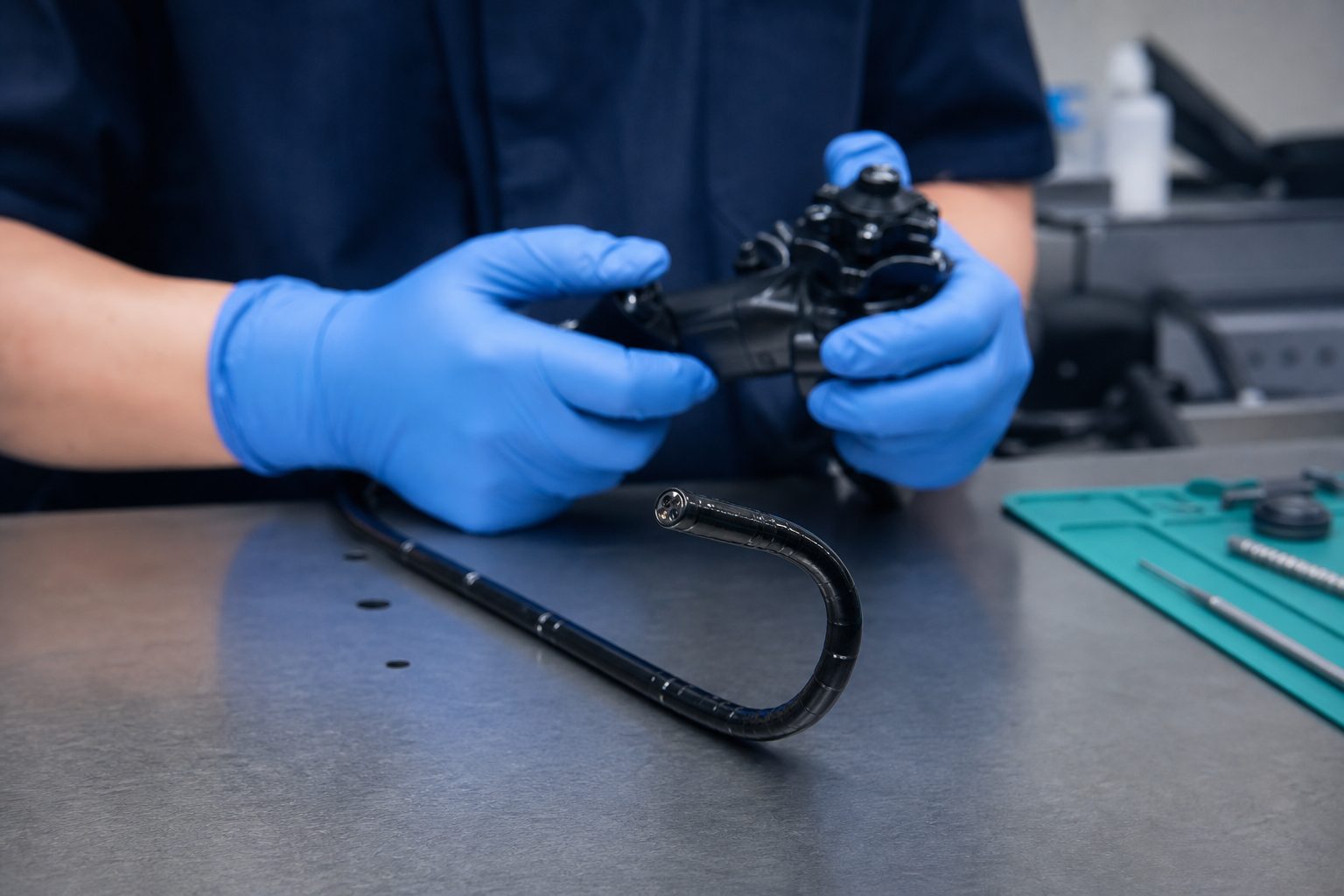
Duodenoscope Reprocessing Scrutiny and What Mechanical Wear Has to Do With It
Duodenoscope reprocessing has been under sustained regulatory and clinical attention since the mid 2010s, when the FDA issued safety communications tying multidrug resistant organism transmission to the elevator region of these scopes. The response across the industry has included revised cleaning instructions, disposable and removable distal caps, culture and quarantine protocols, and eventually disposable elevator components and single use models.
What often gets left out of that conversation is the condition of the device itself. Validated cleaning instructions assume a mechanism in the state the manufacturer built it in. A recess with a worn pivot, a cap that no longer seats flat, or a scored channel liner presents surfaces those instructions were never validated against. Wear is not only a performance issue on this scope. It is the thing that quietly moves a device outside the conditions its reprocessing protocol assumes.
That is why an ERCP scope should be evaluated on a schedule rather than on failure. If your unit is already dealing with a leak test that will not hold, our leak testing and leak repair page covers what to do with the device before it goes anywhere near a reprocessor again.
Duodenoscope Channel Breaches at the Elevator Wire
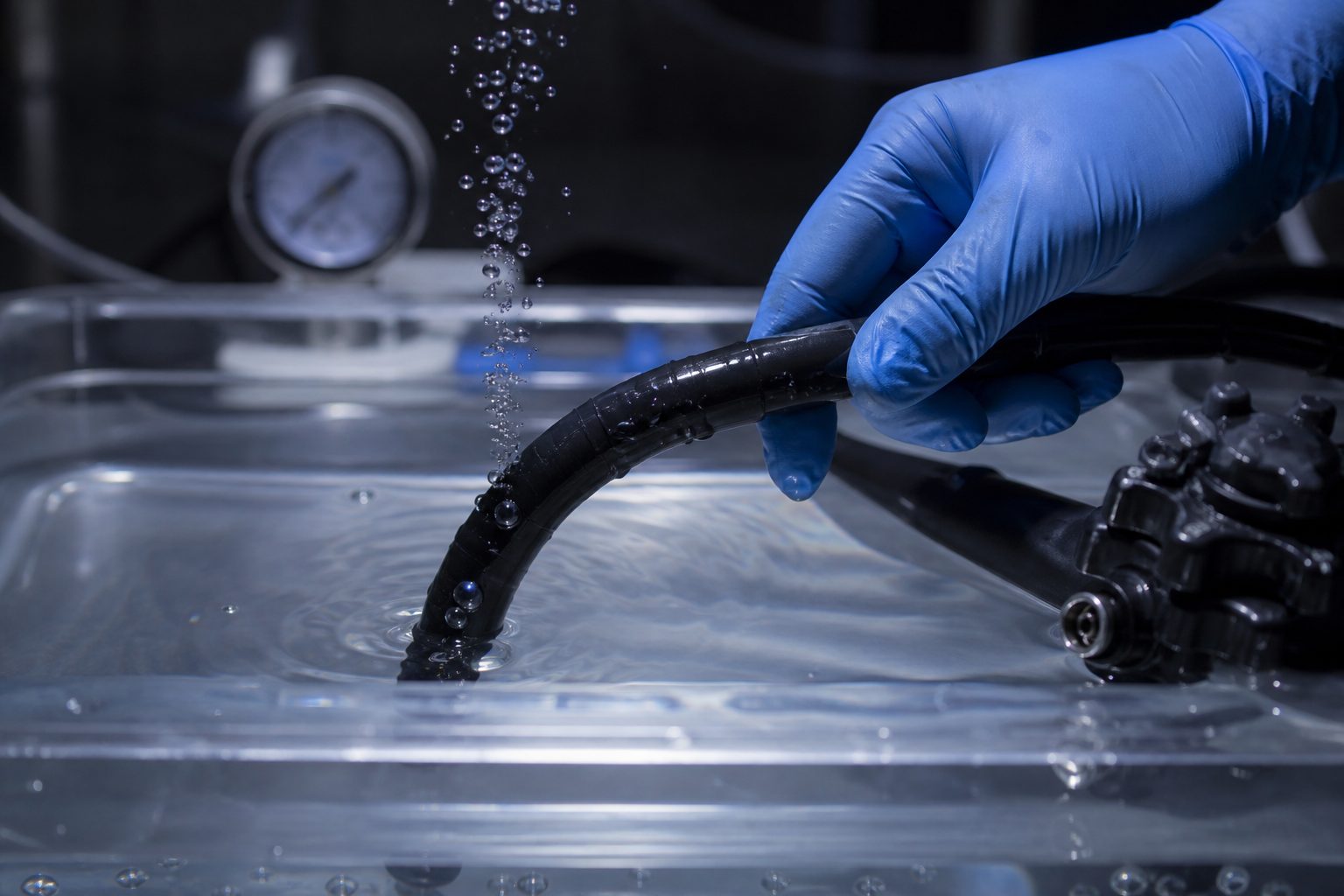
On most flexible scopes the leak hunt starts at the bending rubber and ends there. A side viewing scope adds a channel that runs the elevator wire from the control body to the tip, and a breach in that channel behaves differently from a split in the bending section. It can hold pressure through a short hand test in decontamination and fail under sustained pressure on a bench twenty minutes later.
A department that trusts the quick test keeps putting the scope back into rotation, and each cycle pushes more fluid past the breach. That is the sequence that turns a channel replacement into a control section rebuild. Anything that has reached that stage is covered on our fluid invasion page, and the honest answer there is sometimes that the device is not worth rebuilding.
We leak test on arrival under sustained pressure, isolate the path, and test again after the repair. Both results are documented and returned with the scope.
Side Viewing Scope Optics, the Distal Cap, and the Working Channel
The optics on an ERCP scope sit in a crowded distal end alongside the elevator, the channel exit, and the illumination outlet. Accessories pass within millimeters of the prism on every cannulation attempt, so lens and prism damage on these devices comes from instrument contact far more often than from patient anatomy.
The distal cap holds that whole arrangement together. A cap that is torn, loose, or seated on a worn surface leaves the elevator recess exposed, and it also lets the prism face take strikes it would otherwise be shielded from. We inspect the cap, the seating edge, and the optics as one group rather than as three separate line items on a quote.
Channel work follows the same pattern. Guidewires and sphincterotomes cut a repeatable track through the liner, and the bend at the elevator concentrates it. Where the port hardware is also worn, the fix is described on our working channel and port rebuild page.
Which Duodenoscope Failures Are Worth Repairing
Some of these devices should be retired, and we will tell you which ones. A scope with a stretched elevator wire, a worn recess, a scored liner, and a leak history is a candidate for replacement rather than a rebuild, and saying that costs us a repair order instead of costing your department twice.
When a device is worth repairing, the quote is itemized so the work that returns the scope to rotation is separated from the work that extends its life. You choose. Nothing is opened until you do, and if you decline, the scope goes back to you at no charge.
Most of what we receive in this category carries an Olympus nameplate, with Pentax Medical duodenoscopes close behind. We are independent and are not authorized by either. Departments usually send a colonoscope with deflection loss or a gastroscope with bite damage along on the same pickup.
How it works
How Duodenoscope Service Runs From Pickup to Return
Evaluation first, itemized written quote second, and your authorization before anything is opened up.
Tell us what failed
Send the manufacturer, model, and what you are seeing. A photo of the damage helps but is not required.
We collect the scope
Courier pickup across Southern California, or ship the device in to our bench from anywhere in the country.
You get a written quote
We evaluate the device, document the failure, and price the repair. Nothing proceeds until you approve it.
Repaired, tested, returned
The device is repaired, leak and function tested, and returned with documentation for your records.
Questions we get
Duodenoscope Repair Questions From SPD and Endoscopy Teams
Our scope passes the hand leak test but fails on the reprocessor. What is going on?
The elevator moves but will not reach full angle. Is that repairable?
Can you replace a damaged distal cap?
How does mechanical wear affect our reprocessing protocol?
Do you service the working channel on an ERCP scope as well?
Will you tell us if a scope is not worth fixing?
Related Flexible Scope Repair Work We Handle
The rest of the GI fleet goes through the same bench and the same intake sequence.
Free Evaluation Before Duodenoscope Service Begins
Give us the manufacturer, the model, and the symptom. You will have the diagnosis and the price before anyone touches the elevator.
Monday to Friday, 8:00 AM to 5:00 PM Pacific
Saturday and Sunday, closed
Mail-in repairs received any day
Serving Southern California with pickup and delivery, and the rest of the country by mail-in.