
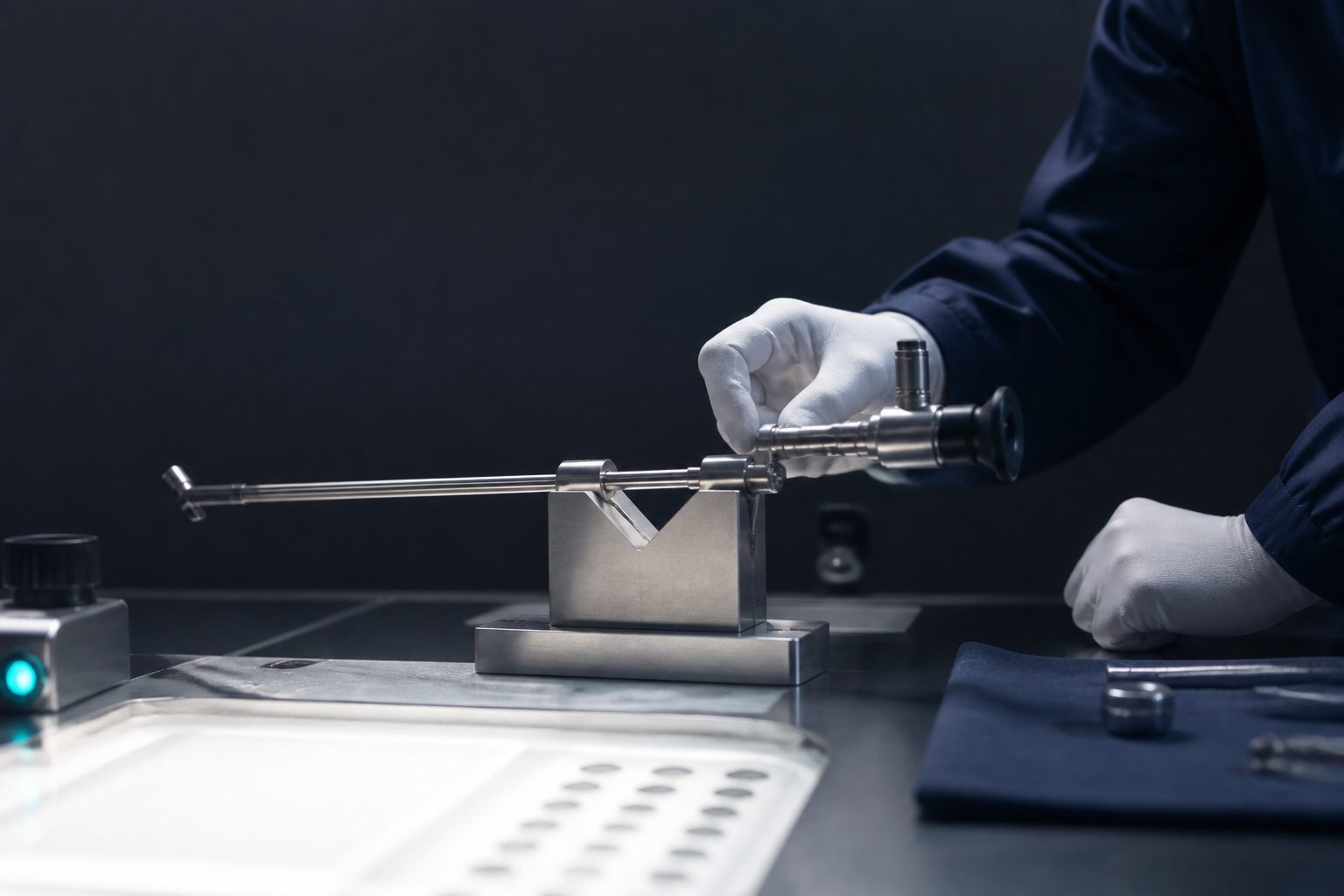
Urology
Nephroscope Repair for Percutaneous Renal Access Sets
Offset optics, a wide working channel, and instruments that pass stone fragments right past the lens. We rebuild nephroscope optics, straighten sheaths, and restore seals, with a written quote before anything is opened.
- Offset optic relay rebuilds and prism correction
- Working channel and sheath straightening
- Distal window replacement after stone tool strikes
- Free evaluation and a written quote before work
Get a Free Repair Quote
Tell us what failed and we will send a written quote before any work begins. No charge for the evaluation, and no purchase order needed to get one.
Quote before any work
You approve a written quote before a technician touches the scope.
Free evaluation
We diagnose the failure and price the repair at no charge, even if you decline.
We come and get it
Pickup and delivery across Southern California, mail-in service everywhere else.
Independent, not the OEM
All major manufacturers serviced, without OEM exchange pricing.
By symptom
Nephroscope Optics Failures We See in Stone Cases
What the tag says when the device leaves the room, and the fault behind it. On a sealed telescope, most of these do not improve with another cycle.
Fractured element in the offset relay
The optical path in a nephroscope bends around the working channel, so the relay has more elements and more transitions than a straight telescope. A flex during tract work cracks one of them, and the lost field shows as a wedge that a relay rebuild is the only fix for.
Distal window damage from stone tools
Rigid graspers, ultrasonic probes, and laser fibers all travel through a channel a few millimeters from the window, and stone fragments come back the same way. Each strike leaves a chip that scatters light and flattens contrast in a field already full of debris.
Bent sheath after tract dilation
Access sheaths get loaded sideways during dilation and while the surgeon works the angle between the calyx and the skin. A sheath that is slightly bowed still passes an obturator, then binds on the telescope, and the force used to seat it lands on glass.
Working channel obstruction or a failed seal
Stone dust, blood, and fragments build up in a wide channel, and the seals at the ports harden with steam cycling. Flow falls, visibility falls with it, and the case slows down. Channels are cleared and inspected and port seals are replaced.
Moisture inside the optical train
Steam has passed a worn seal and condensed on internal glass surfaces that no brush can reach. It reads as a warm cast first and a haze later, and continued autoclaving turns a seal replacement into a full rebuild of the relay.
Broken illumination fibers
Fiber strands break at the light post and along the shaft from handling, and the loss is gradual enough that nobody dates it to a specific case. We count the surviving strands and rebuild the bundle, after ruling out the light cable, which fails the same way and costs less to fix.
Offset Optics and the Nephroscope Sheath That Carries Them
A nephroscope is built around a compromise. The surgeon needs a wide straight working channel to pass rigid graspers and ultrasonic probes and to bring stone fragments back out, and the optics have to get out of the way to allow it. So the eyepiece sits offset from the shaft and the optical path bends around the channel rather than running straight down the middle.
That geometry has consequences on the bench. There are more elements in the relay, more transitions where glass meets air, and an angled section that concentrates any bending stress at a predictable point. It is also why a nephroscope that has been flexed usually shows a wedge of missing field rather than an even loss of brightness. The shared physics of rod lens telescopes is on the rigid endoscope service hub.
The sheath is part of the optical system in practice, even though it is not on paper. If it is bent, the telescope no longer sits square inside it, and the seating force goes into glass. We check the two together and correct both, because returning rebuilt optics into a distorted sheath produces another repair order in short order.
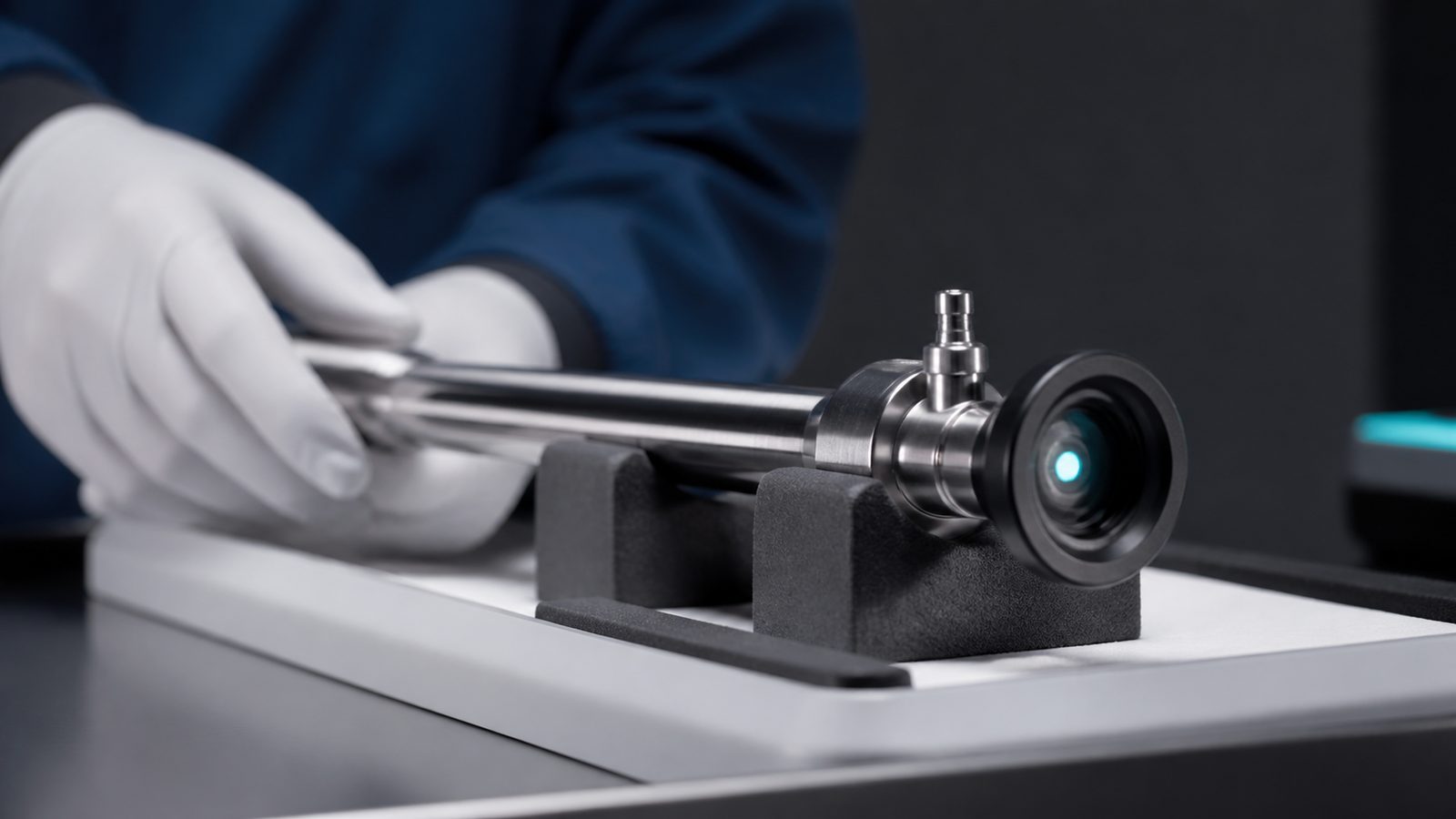
Tract Dilation Damage in Percutaneous Renal Access
Almost nothing about establishing percutaneous renal access is gentle. The tract is dilated through muscle and fascia, the sheath is advanced into a calyx, and the angle between the skin and the collecting system is fixed by anatomy rather than by preference. The surgeon then works that angle for the length of the case, and the telescope goes along for the ride.
The damage that follows is mechanical and predictable. Shafts bow slightly, sheaths lose their true, and the distal end takes contact with the edge of the access sheath every time the scope is withdrawn and reinserted. None of it is a technique failure, it is what the procedure asks of the instrument.
What departments can influence is what happens afterward. A scope that is set down on a cluttered back table, transported loose, or stacked in a tray with rigid graspers accumulates far more damage between cases than during them. We record where the damage sits on each device so the pattern is visible rather than assumed.
Stone Extraction Tools and Nephroscope Optics Damage
The working channel is the whole point of the device and it is also the main threat to the optics. Rigid graspers are advanced under vision, but the last few millimeters before the tip clears the channel are the ones nobody watches, and that is where a probe or a laser fiber can strike the window. Fragments coming back out do their own share of the work.
The result is not usually a dramatic break. It is a slowly accumulating field of chips and scratches on the distal window that drops contrast case by case, and surgeons adapt without ever filing a complaint. Windows are replaceable and resealing the tip is routine, which is covered in more detail on the cracked distal lens page.
It is worth pulling a device for window work earlier than instinct suggests, because a chipped window plus a stressed seal is how moisture gets in. The same optical construction runs through the Karl Storz urology telescopes and Richard Wolf nephroscopy sets most stone programs are built on. We are an independent shop and are not affiliated with or authorized by any manufacturer.
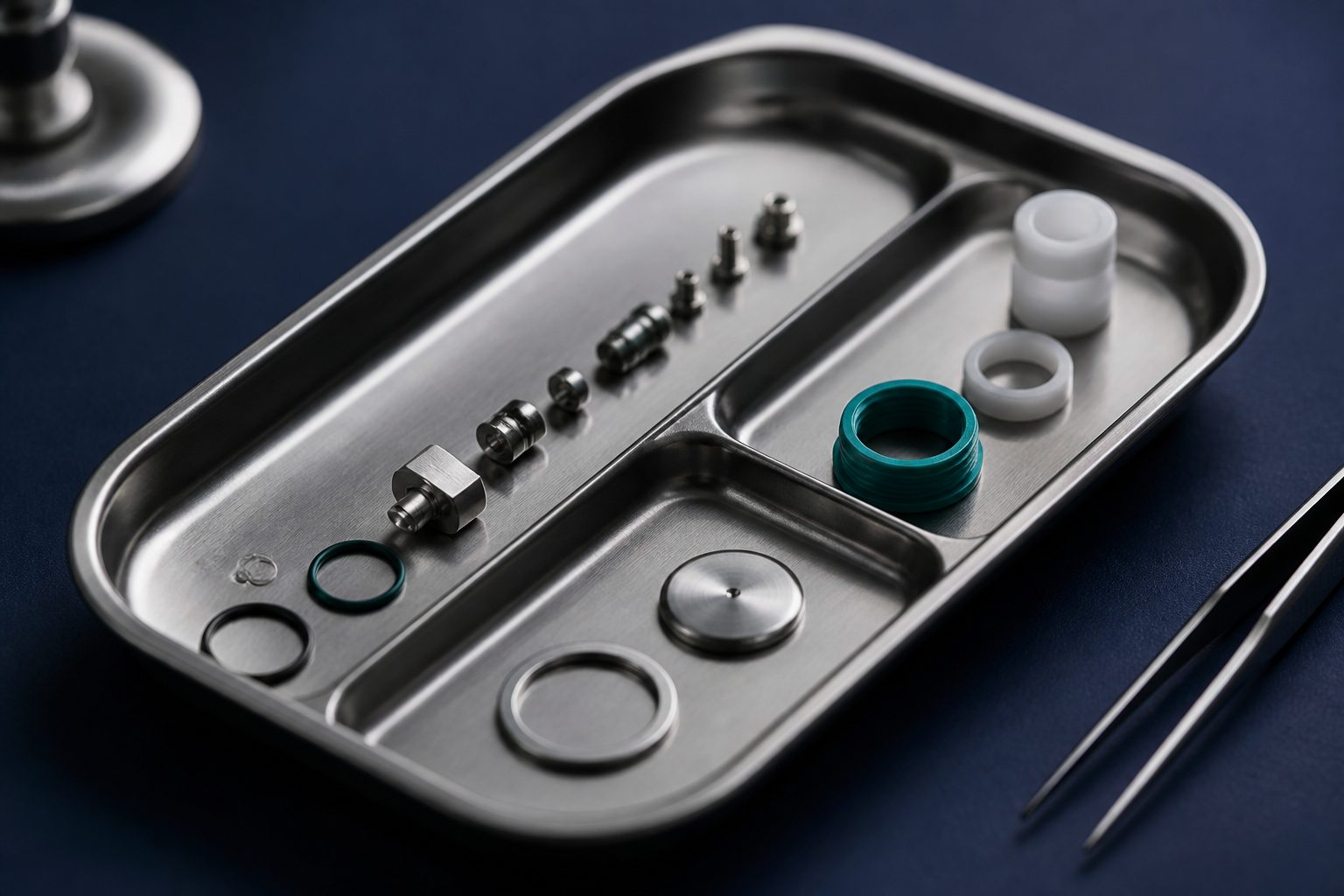
Steam Cycling, Seals, and Nephroscope Service Life
Seals are the quiet limit on how long a rigid telescope lasts. Every autoclave cycle takes them from room temperature to well above boiling and back, and after a few hundred of those the material no longer returns to shape. The device does not announce it. The image simply goes slightly warm, then hazy, and by then there is water sitting on glass you cannot reach.
If the scope stays in rotation the surfaces begin to etch, which is the difference between replacing seals and rebuilding the relay. The course is the same one we describe for fluid invasion in sealed scopes, and the response should be the same. Take the device off the schedule now rather than at the end of the block.
Since rigid telescopes are not pressure tested at assembly, the control is a ten second look through the eyepiece at a bright surface. Clear and colorless goes back on the tray, anything else goes in the repair box. Most urology programs send this inventory together with their cystoscopy telescopes and resectoscope working elements, and a dim field that turns out to be the cable rather than the scope is handled as illumination and light fiber repair.
How it works
How Nephroscope Service Works, From Pickup to Return
Four steps, and the decision on scope of work belongs to your department once the written evaluation arrives.
Tell us what failed
Send the manufacturer, model, and what you are seeing. A photo of the damage helps but is not required.
We collect the scope
Courier pickup across Southern California, or ship the device in to our bench from anywhere in the country.
You get a written quote
We evaluate the device, document the failure, and price the repair. Nothing proceeds until you approve it.
Repaired, tested, returned
The device is repaired, leak and function tested, and returned with documentation for your records.
Questions we get
Nephroscope Repair Questions From SPD and Urology Teams
Should the access sheath come with the scope?
Is a scratched distal window worth repairing if the surgeon has not complained?
Our irrigation flow has dropped. Is that the scope or the tubing?
Can offset optics be rebuilt, or do they have to be replaced?
How quickly should a hazy device come out of rotation?
Other Rigid Scope Repair Pages in This Section
Related rigid inventory built the same way, exposed to the same steam, and damaged by a different set of instruments.
Get a Free Quote on Your Nephroscope Optics Repair
Tell us the manufacturer, the size, and whether the sheath is coming with it. We will price the repair before anyone opens the device.
Monday to Friday, 8:00 AM to 5:00 PM Pacific
Saturday and Sunday, closed
Mail-in repairs received any day
Serving Southern California with pickup and delivery, and the rest of the country by mail-in.