
Gastroenterology
Sigmoidoscope Repair for Flexible Lower GI Scopes
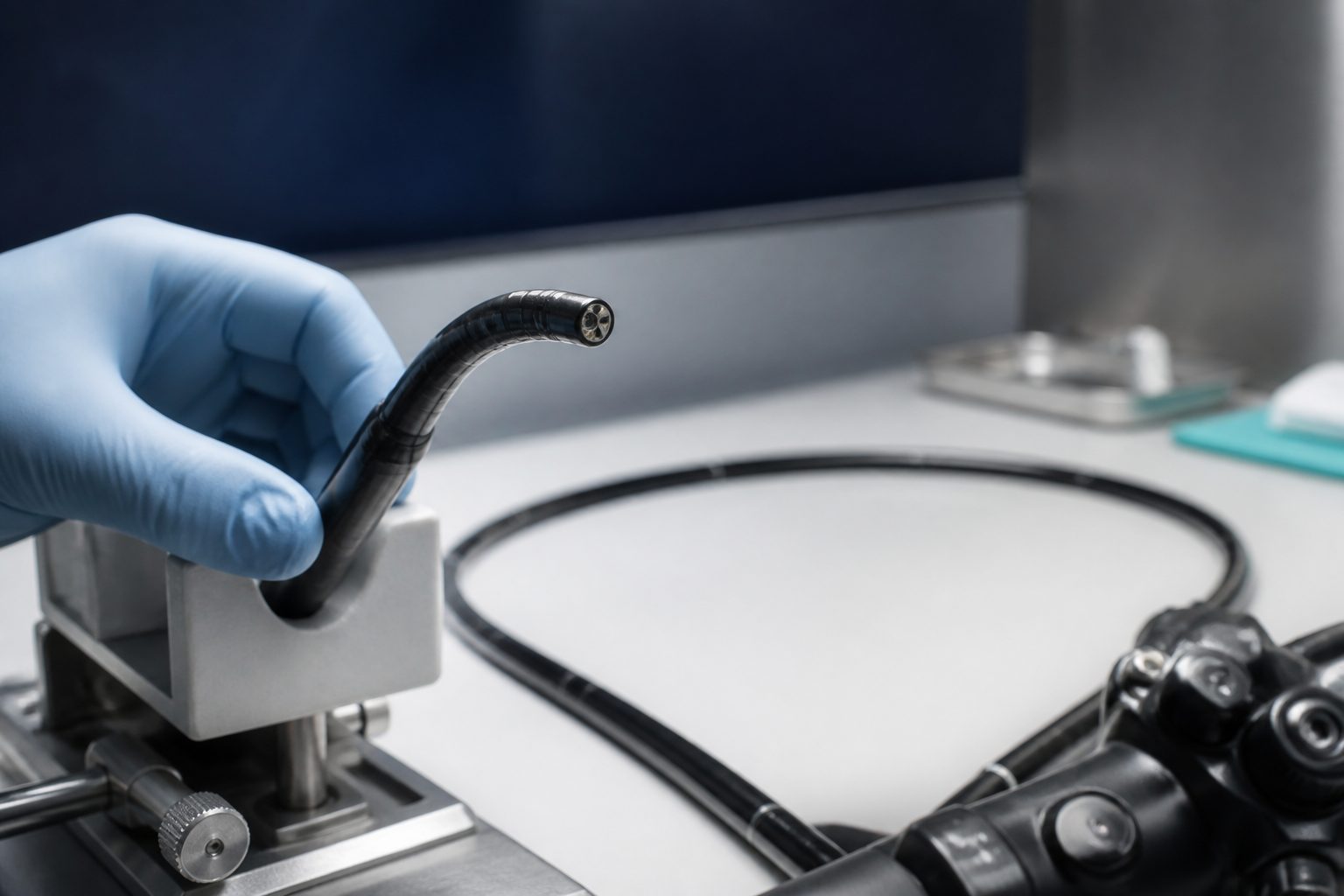
A flexible sigmoidoscope fails the same way a colonoscope does, only slower and with less attention on it. We repair angulation, channels, optics, and leaks, with a written quote before any work starts.
- Angulation and deflection recovery
- Channel liner and valve seat work
- Bending rubber and leak repair
- Distal lens and illumination service
Get a Free Repair Quote
Tell us what failed and we will send a written quote before any work begins. No charge for the evaluation, and no purchase order needed to get one.
Quote before any work
You approve a written quote before a technician touches the scope.
Free evaluation
We diagnose the failure and price the repair at no charge, even if you decline.
We come and get it
Pickup and delivery across Southern California, mail-in service everywhere else.
Independent, not the OEM
All major manufacturers serviced, without OEM exchange pricing.
By symptom
Sigmoidoscope Failures That Take a Scope Down
Lower volume does not mean fewer faults. It means the faults sit undetected for longer. These six cover most of what arrives.
Aged and cracked bending rubber
Bending rubber hardens with time as well as with use, and a scope stored deflected cracks at the fold it was left in. The split shows up on the first leak test after a quiet stretch. Rubber replacement and pressure testing follow.
Stretched or slack angulation wires
Torque against the sigmoid loop stretches the steering wires on a lower GI scope just as it does on a colonoscope. Travel falls off, often unevenly between directions. Wires are replaced and tension is reset at the control body.
Dried soil in the air and water lines
A scope that sits between cases lets residual moisture and protein dry into the narrow lines. The block starts at the nozzle and works backward. Lines are cleared, seats and nozzle replaced as needed, then flow is confirmed at the tip.
Scored working channel liner
Biopsy forceps cut grooves into the liner over time, and grooves hold soil that cleaning verification will eventually catch. Liner replacement is the durable fix, and it stays a small job while the wall is still intact.
Broken illumination fibers
Illumination bundles break a few fibers at a time along the bending section, so the field darkens gradually instead of failing. The light source usually gets blamed first. We test the scope and the cable separately.
Worn suction valve seat
The seat under the valve erodes from cycling and dried debris until a new disposable valve can no longer seal against it. Flow falls well before the channel is blocked. Seat replacement restores the draw.
Storage, Handling, and Flexible Sigmoidoscope Damage
This device has a different problem from the rest of the GI fleet. It is not overworked, it is under watched. A clinic may run a handful of cases a month, hang the scope, and go weeks without anyone looking closely at the bending section or the distal end. Damage that a colonoscope would reveal in two days sits on a sigmoidoscope for a quarter.
Time itself is a failure mode here. Bending rubber stiffens and cracks at whatever fold the scope was stored in, residual moisture dries into the air and water lines, and a small leak that nobody found lets fluid work into the device over months rather than hours. The first leak test after a quiet period finds all of it at once.
That is why a scope with low case counts still belongs on a scheduled evaluation rather than a failure driven one. Every device that arrives goes through the same intake as the rest of our flexible endoscope repair service: leak test, channel patency, articulation, then image.
Sigmoidoscope Channel Blockage and Valve Seat Wear
Weak suction on a low volume scope is almost always read as a blocked channel, and the disposable valve gets swapped first because it is the cheapest thing to try. When the flow does not come back, the scope goes out for a channel job it may not need. The seat under the valve is the more common culprit, and it is a much smaller repair.
We test flow at the distal tip rather than at the connector so the restriction is located instead of guessed at. Where the line is genuinely the problem, the work is the same air and water channel replacement we perform on higher volume devices. Where the biopsy port is leaking or sticking, that is a port and liner rebuild instead.
Where GI Scope Repair on a Sigmoidoscope Differs From a Colonoscope
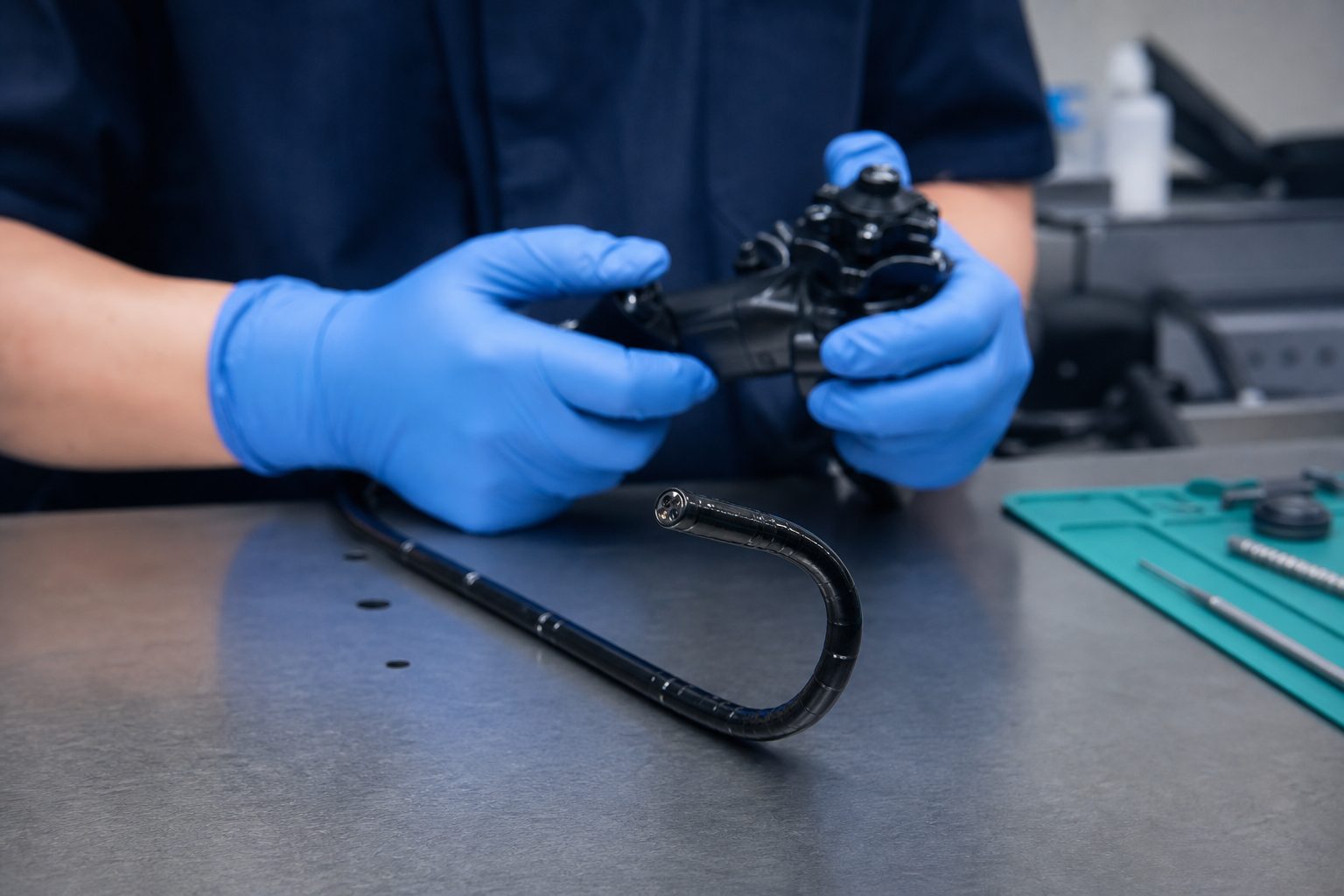
The failure list is largely shared. Angulation wires stretch, bending rubber splits, channel liners score, and illumination fibers break, exactly as they do on a longer scope. What changes is scale and sequence. A shorter insertion tube sees less torque per case, so wires last longer, but fewer cases also means fewer chances to notice that they have gone.
Practically, that means a sigmoidoscope tends to arrive with several small faults at once rather than one urgent one. The quote reflects that, itemized so you can separate what returns the scope to service from what extends its life. If deflection is the item you are looking at, our steering cable repair page explains the work in detail.
Departments that run both usually send them together, and a colonoscope with stretched cables or a gastroscope with bite damage travels on the same pickup. Most of what we see carries an Olympus nameplate or a Pentax Medical badge, and we are independent of both.
Sigmoidoscope Failures That Are Cheaper to Catch Early
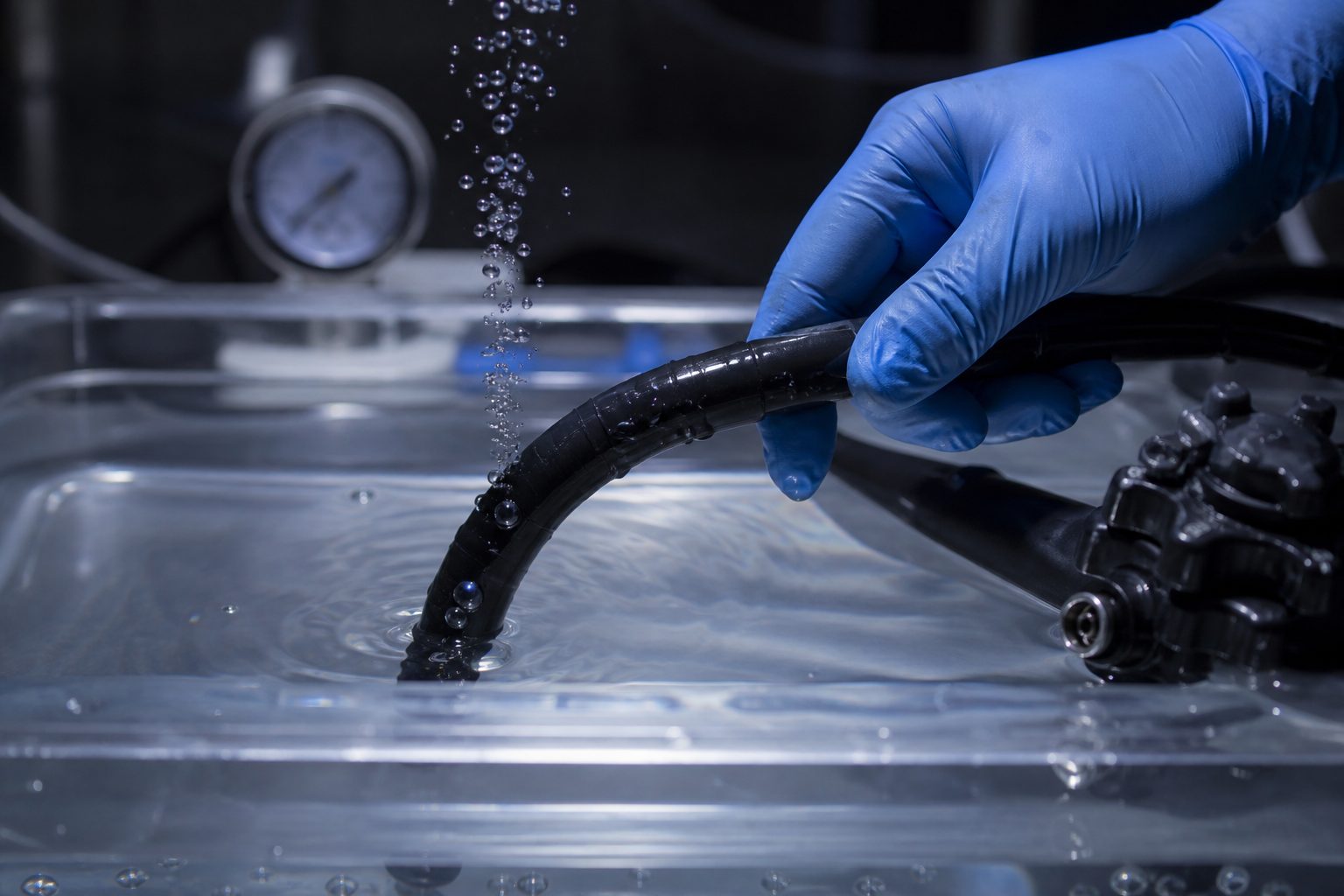
A scored channel liner costs one thing today and something else entirely once it perforates. A hairline split in the bending rubber costs one thing before a reprocessing cycle and considerably more after fluid reaches the control section. On a device nobody is watching closely, both of those transitions happen without a witness.
The practical answer is a leak test on a schedule rather than only after a complaint, and an evaluation when a scope has been idle for a long stretch. If a device has already been through a cycle in a breached state, our fluid invasion page covers what is still recoverable and what is not.
How it works
How Sigmoidoscope Service Works From Pickup Onward
Evaluation first, itemized written quote second, and no work until you authorize it.
Tell us what failed
Send the manufacturer, model, and what you are seeing. A photo of the damage helps but is not required.
We collect the scope
Courier pickup across Southern California, or ship the device in to our bench from anywhere in the country.
You get a written quote
We evaluate the device, document the failure, and price the repair. Nothing proceeds until you approve it.
Repaired, tested, returned
The device is repaired, leak and function tested, and returned with documentation for your records.
Questions we get
Sigmoidoscope Repair Questions From Clinic and SPD Staff
The scope sat unused for months and now fails a leak test. What happened?
Suction is weak but we already replaced the valve. What else should we check?
Is a sigmoidoscope repair different from a colonoscope repair?
We only run a few cases a month. Is a scheduled evaluation worth it?
Do you collect the scope or do we ship it?
Related Flexible Scope Repair Pages
The other devices we service on the same bench, with the same intake sequence.
Get a Written Quote on Sigmoidoscope Service
Tell us the manufacturer, the model, and the symptom. We price the repair before anyone opens the scope.
Monday to Friday, 8:00 AM to 5:00 PM Pacific
Saturday and Sunday, closed
Mail-in repairs received any day
Serving Southern California with pickup and delivery, and the rest of the country by mail-in.