
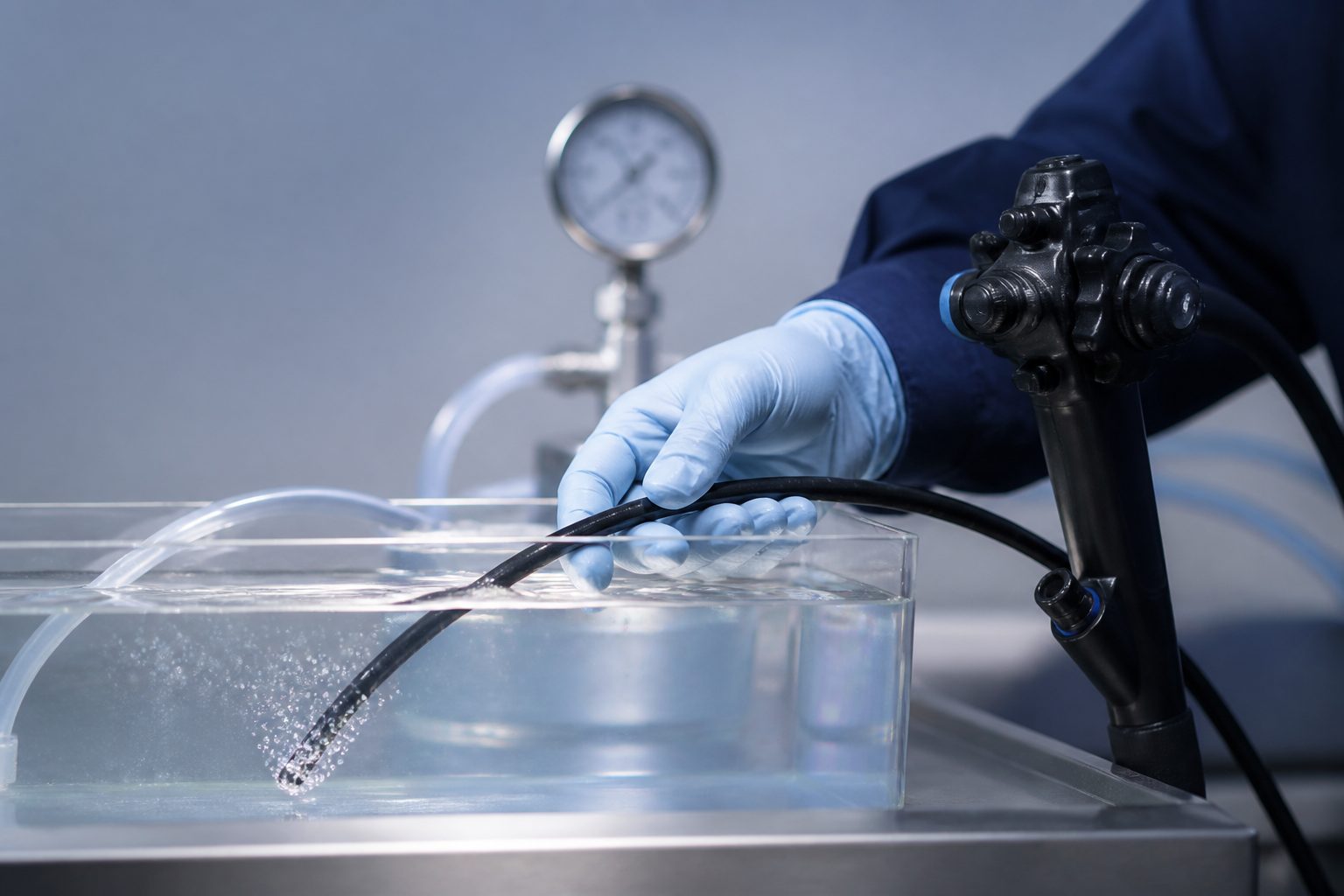
Fluid has entered the scope body or control section
Endoscope Fluid Invasion Repair When Water Has Reached the Inside of the Scope
Fluid invasion is what a missed leak becomes. Every hour the scope sits wet, corrosion moves further into the angulation wires, the image bundle, and the electronics that were never meant to get wet.
- Call for advice on a wet scope before reprocessing
- Corrosion assessment before any teardown quote
- Free evaluation and a written quote first
- Pickup in Southern California, mail-in nationwide
Get a Free Repair Quote
Tell us what failed and we will send a written quote before any work begins. No charge for the evaluation, and no purchase order needed to get one.
Quote before any work
You approve a written quote before a technician touches the scope.
Free evaluation
We diagnose the failure and price the repair at no charge, even if you decline.
We come and get it
Pickup and delivery across Southern California, mail-in service everywhere else.
Independent, not the OEM
All major manufacturers serviced, without OEM exchange pricing.
Symptom to cause
How Fluid Invasion Shows Itself Before Anyone Opens the Scope
Water inside a scope announces itself in ways that look like unrelated faults. These are the ones that are worth treating as an emergency.
What you see
Visible moisture, droplets, or fogging behind the eyepiece or on the monitor image
Likely cause
Fluid has reached the optical train through a breached seal and is condensing on lens surfaces inside the sealed assembly.
What we do
Open the optical path, clean and dry each surface, replace the failed seal or window, and reseal the assembly before the coating is etched.
What you see
Water audibly moves or sloshes inside the control body when the scope is tilted
Likely cause
A standing volume of water and chemistry has collected in the lowest point of the control section, usually after reprocessing a breached scope.
What we do
Drain and open the control body, assess corrosion on the angulation mechanism and wiring, and replace the components that have started to pit.
What you see
The image has green, purple, or blotchy discoloration that was not there last week
Likely cause
Fluid contact on the image bundle or the CCD assembly. On fiber scopes this reads as a spreading stain, on video scopes as color shift and noise.
What we do
Assess the imaging assembly directly. Bundle or sensor replacement is the only real repair once fluid has reached it, so we quote that plainly rather than cleaning and hoping.
What you see
Deflection has become stiff, gritty, or uneven since the scope was last reprocessed
Likely cause
Corrosion products forming on angulation wires and inside their sheaths. Wet wires bind before they break.
What we do
Replace the affected angulation wires and sheaths, clean the pulley and sprocket assembly, and reset tension so both planes deflect evenly again.
What you see
Corrosion, staining, or white residue visible at the light guide connector pins
Likely cause
Fluid has tracked down the umbilical to the connector. Chemistry residue keeps attacking the contacts long after the water has evaporated.
What we do
Strip and assess the connector, replace corroded contacts and seals, and confirm continuity and insulation across the full wiring run.
What you see
The scope passed a leak test today but was reprocessed after failing one earlier
Likely cause
A breach that has since closed under a repair or a swollen seal, with the fluid it admitted still sitting inside. A passing test does not mean a dry scope.
What we do
Treat the history, not the gauge. We open and inspect the interior on any device with a known reprocessing cycle after a failed leak test.
What Not to Do Once Fluid Invasion Is Suspected
The window between the first sign and permanent damage is measured in hours. Most of what people do by instinct closes that window faster.
- Do not reprocess the scope again, not even to make it safe to handle. Every additional cycle adds fluid volume and pushes chemistry deeper into components that are already corroding. If handling is a concern, bag the device and tell us its status when you call.
- Do not put the scope in an oven, a drying cabinet, a warming drawer, or in front of a heat gun. Heat drives residual moisture into sealed optical assemblies, softens adhesives, and distorts polymer parts. The water leaves and the salts and chemistry residue stay behind.
- Do not store the scope and deal with it next week. Corrosion on angulation wiring and connector contacts is time driven and it does not pause. A device that was repairable on Monday can be a parts donor by the following Monday.
- Do not keep the scope coiled tightly in a closed case. Trapped fluid pools at the low point and sits against whatever is there. Hang it or lay it out straight, tagged out of rotation.
- Do not attempt to flush or purge the interior with air or alcohol. Both push fluid sideways into dry compartments that were not affected yet, and alcohol attacks the adhesives holding the distal assembly together.
Why Endoscope Fluid Invasion Is a Clock and Not a Condition
A cracked lens will look the same in three weeks as it does today. Fluid invasion will not. From the moment water and high level disinfectant reach the interior, you have an electrochemical process running against steel angulation wire, against connector contacts, and against adhesive bonds that were engineered on the assumption they would stay dry.
That is why this page reads more urgently than the rest of the site. The technical work is not unusual, but the outcome depends almost entirely on elapsed time and on whether the device saw another reprocessing cycle after the fluid got in. Two identical scopes with identical breaches can end up as a routine repair and as a total loss, separated only by what happened in the first day.
If you suspect fluid is inside, the useful next step is a phone call, not a decision. We would rather talk you through what to check than have a device sit in a cabinet while someone decides whether it is worth sending. The rest of the failure modes we repair can wait a week. This one cannot.
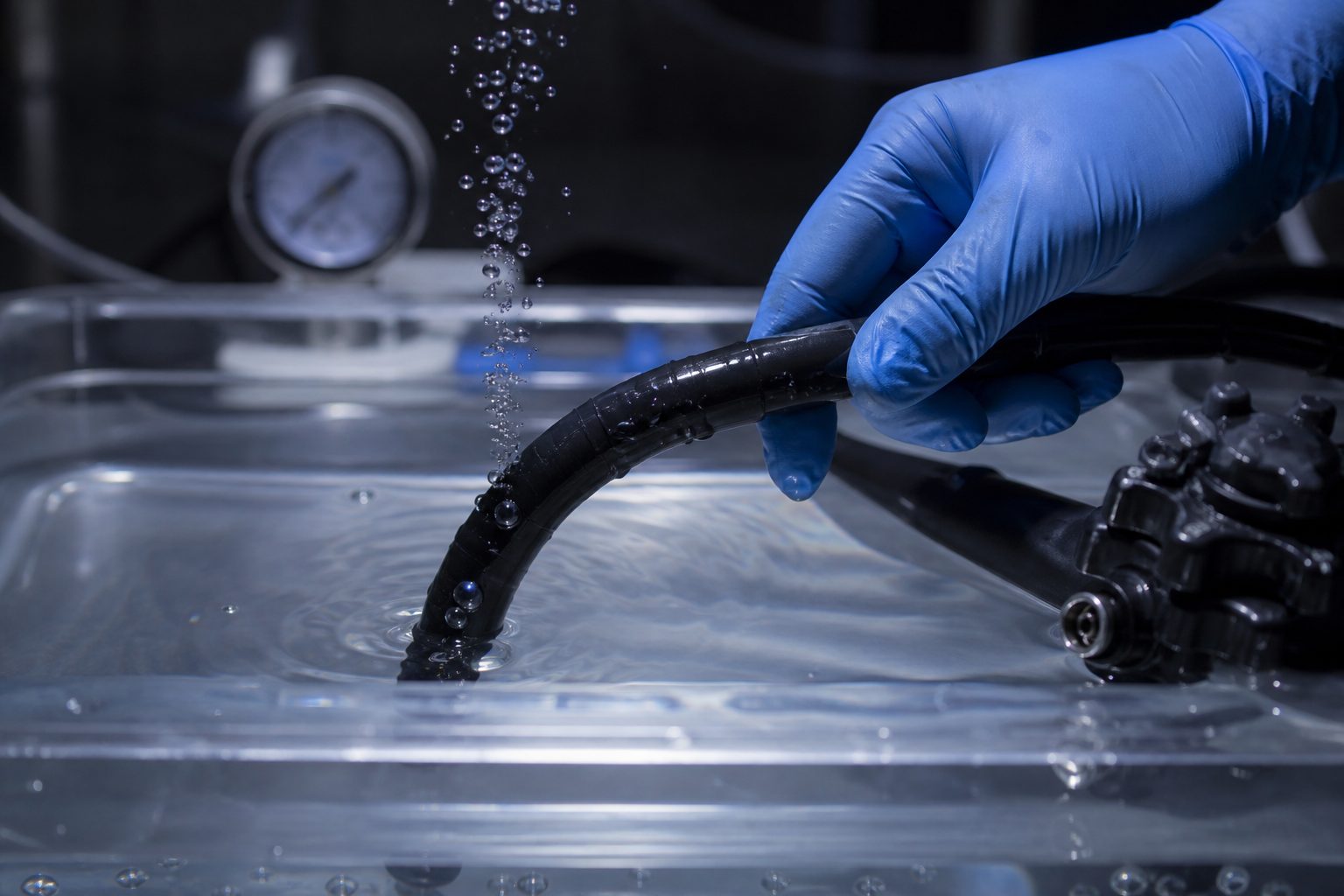
What a Missed Leak Test Turns Into Over the Next Few Cycles
Nearly every fluid invasion case we see started as a small breach that either was not caught or was caught and then overtaken by the schedule. A pinhole in the bending rubber admits very little water on the first pass. It is the automated reprocessor, running pressure and temperature against an open envelope, that fills the scope.
This is the single strongest argument for treating a failed leak test as a stop work event rather than a note on a tag. The upstream page on leak testing and leak repair covers how to find a breach and how to test in a way that catches the ones that only open under articulation. The two pages are the same story at two stages.
It is also worth knowing that a scope can pass a leak test and still be wet inside. Swollen seals and displaced adhesive can close a breach temporarily. If a device has a documented failed test followed by a reprocessing cycle, the interior needs eyes on it regardless of what the gauge says today.
What Fluid Damage Does to the Components Inside a Scope
Different assemblies fail on different timescales, which is why an early call changes the quote so much. Corroded steering wire is usually the first thing to make itself felt, which is why a wet scope and a complaint about stiff or short tip deflection so often arrive together. These are the parts we assess first on any wet device.
- Angulation wires and their sheaths, where corrosion causes binding first and breakage later
- The image bundle on fiber scopes, where fluid contact reads as a spreading dark or colored stain
- The CCD or CMOS assembly on video scopes, where the result is color shift, noise, and eventual loss of signal
- Illumination fiber ends, where residue on the polished face cuts light output well before any fiber breaks
- Light guide connector contacts, where chemistry residue keeps working long after the device looks dry
- Channel liners and bonded joints, where softened adhesive lets a channel separate under later suction
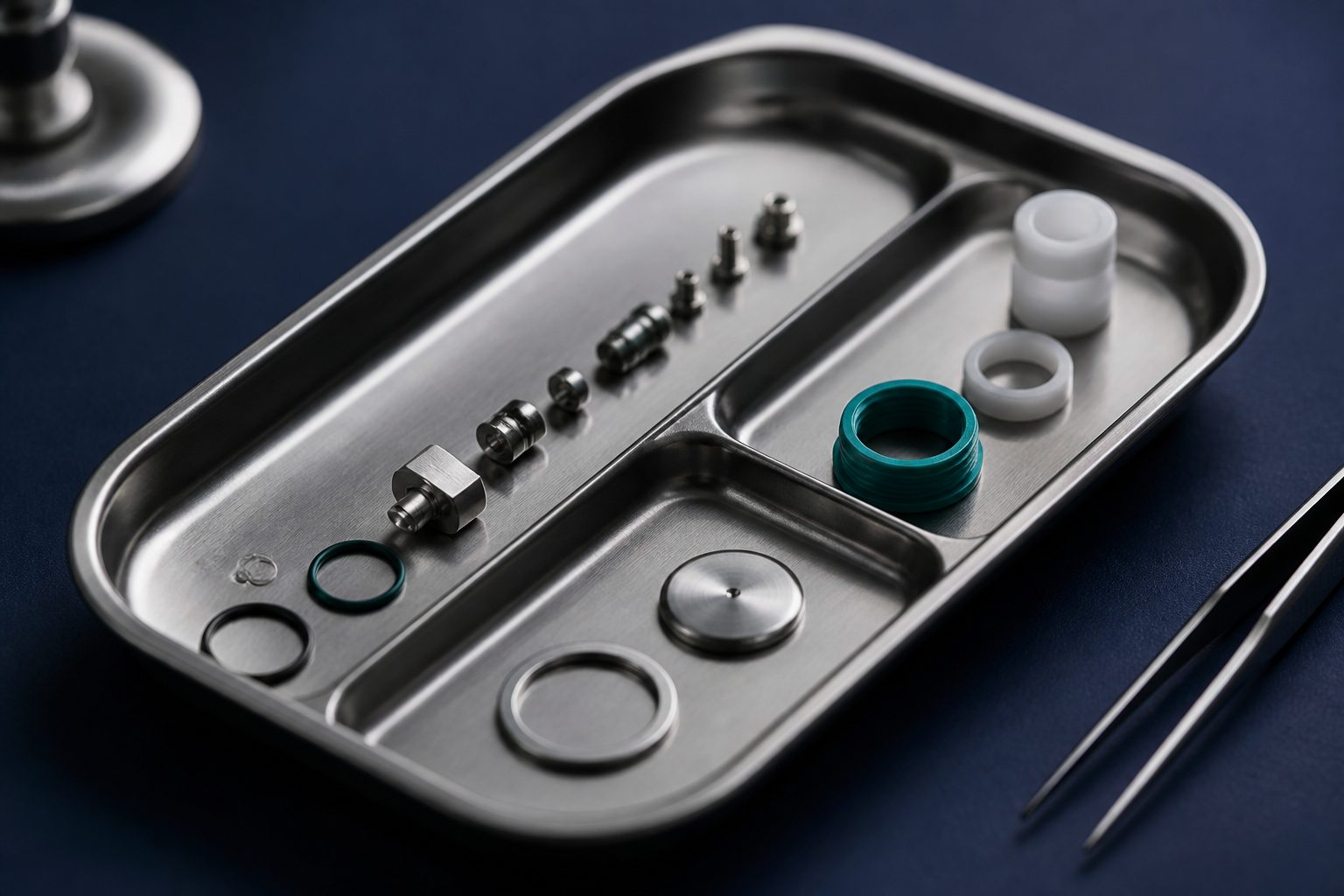
The First Hour After Fluid Invasion Is the One That Decides the Outcome
Take the scope out of the workflow, leave it uncoiled, keep it out of any cabinet or cycle, and call. That is the whole protocol. Nothing you can do locally improves the outcome, and most of the obvious moves make it worse, which is why the warnings above are written the way they are.
On our side, a wet device gets assessed ahead of the routine queue. We open it, document what the fluid reached, and give you a written quote along with a straight opinion on whether the rebuild makes sense. Some scopes come back to full service. Some are better used as a source of parts, and we will say that rather than bill you for a rebuild that will fail again in a month.
Departments running duodenoscope service see this most often, because those devices carry the heaviest reprocessing burden of anything in the building. High volume colonoscope repair work is a close second. Whatever the device, the intake path is the same flexible scope service route.
How it works
How Endoscope Fluid Damage Repair Works on Our Bench
Assessment first, an honest opinion on whether the device is worth rebuilding, and a written quote before anything is committed.
Tell us what failed
Send the manufacturer, model, and what you are seeing. A photo of the damage helps but is not required.
We collect the scope
Courier pickup across Southern California, or ship the device in to our bench from anywhere in the country.
You get a written quote
We evaluate the device, document the failure, and price the repair. Nothing proceeds until you approve it.
Repaired, tested, returned
The device is repaired, leak and function tested, and returned with documentation for your records.
Questions we get
Fluid Invasion Questions From SPD and Biomed Teams
How do we know whether fluid actually got inside the scope?
Is a scope with fluid invasion always a total loss?
Should we dry the scope out before sending it to you?
The scope passes the leak test now. Can we put it back in rotation?
Will you tell us if the repair is not worth doing?
What information helps most when we call about a wet scope?
Other Flexible Endoscope Failures Tied to Water Ingress
Fluid invasion almost never travels alone. These are the faults that show up on the same device before and after it.
Leak Testing
The scope fails a leak test in reprocessing
Cracked Distal Lens
The image is starred, hazy, or partially blacked out
Bent Insertion Tube
The insertion tube is kinked, buckled, or will not straighten
Angulation Loss
The tip will not reach full deflection or feels loose
Dim Illumination
The field is dim even at full light source output
Channel Blockage
Air or water will not pass, or insufflation is weak
Biopsy Port
The biopsy port leaks, sticks, or will not seal
Move Fast on a Scope With Fluid Invasion
Call before you store it, dry it, or send it through anything. Tell us the manufacturer, the model, and when the fluid got in.
Monday to Friday, 8:00 AM to 5:00 PM Pacific
Saturday and Sunday, closed
Mail-in repairs received any day
Serving Southern California with pickup and delivery, and the rest of the country by mail-in.