
ENT
Sinuscope Repair for 0, 30, 45, and 70 Degree Optics
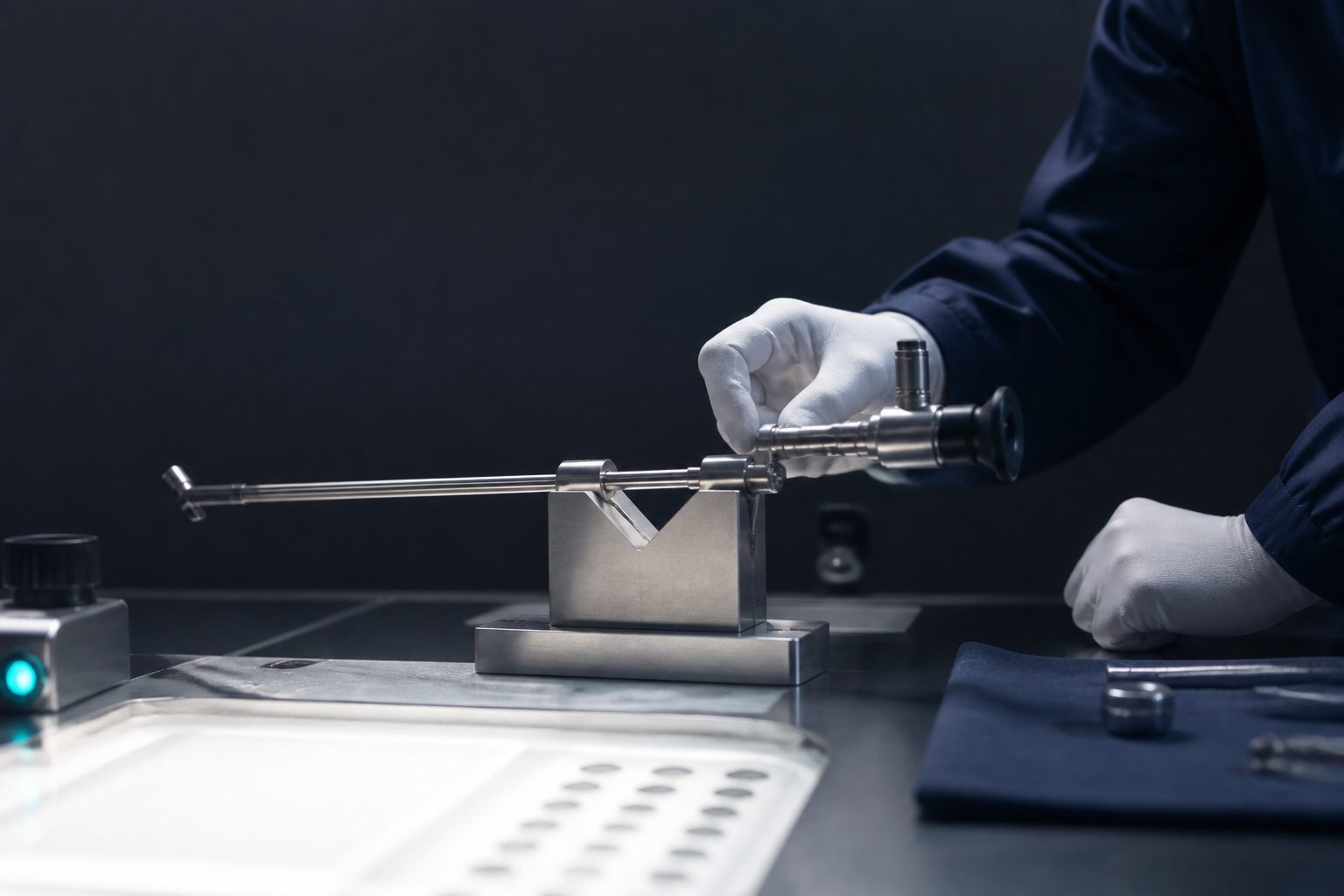
Small diameter telescopes working in the tightest anatomy in surgery, handled a dozen times a day in clinic. We rebuild angled sinuscope optics, replace distal windows, and restore seals, with a written quote before anything is opened.
- Rod lens rebuilds on 2.7 mm and 4 mm telescopes
- Angled prism correction on 30, 45, and 70 degree optics
- Distal window replacement and tip resealing
- Free evaluation and a written quote before work
Get a Free Repair Quote
Tell us what failed and we will send a written quote before any work begins. No charge for the evaluation, and no purchase order needed to get one.
Quote before any work
You approve a written quote before a technician touches the scope.
Free evaluation
We diagnose the failure and price the repair at no charge, even if you decline.
We come and get it
Pickup and delivery across Southern California, mail-in service everywhere else.
Independent, not the OEM
All major manufacturers serviced, without OEM exchange pricing.
By symptom
Sinuscope Optics Failures We See in ENT and Clinic Use
The complaint your staff writes down, and the fault inside a sealed tube that is causing it. Very few of these improve with another cleaning cycle.
Fractured element in a narrow relay
A 2.7 mm telescope has a glass column only a couple of millimeters across, so a modest bend during handling fractures an element and takes a curved slice of the field with it. The relay has to be opened, and no amount of reprocessing will change what the surgeon sees.
Displaced distal prism
Angled telescopes depend on a prism sitting at a fixed angle at the tip. An impact against a speculum, a suction tip, or the edge of a tray moves it, and the 45 degree view starts behaving like something between angles. The prism is reset and the tip resealed.
Moisture inside the optical train
Steam has worked past a tired eyepiece or window seal and condensed on internal glass. On a small telescope the haze covers most of the useful field fast, which is why ENT teams tend to catch this earlier than other specialties do.
Bent shaft from tight anatomy
Working around a septal deviation or through a narrow ostium loads the shaft sideways, and thin walls give way before the surgeon feels resistance. We straighten the tube and inspect the full relay, because a bend that looks slight normally comes with cracked glass.
Broken illumination fibers
A narrow telescope carries a small fiber bundle with little redundancy, so brightness drops noticeably after fewer broken strands than on a laparoscope. Bending at the light post and repeated clinic handling are the usual causes, and the bundle can be rebuilt.
Distal window damage
Through cutting instruments, microdebriders, and suction pass within a millimeter of the window in a space with no room to move. Each chip scatters light into the picture, dropping contrast in a field that is already close and bloody. The window is replaced and the tip resealed.
Why a Sinus Telescope Breaks More Often Than the Rest
ENT departments repair rigid telescopes more often than almost anyone else, and the reason is structural rather than behavioral. A sinus telescope is thin, and thin means low resistance to bending. It works in a space where there is no room to reposition, so the shaft is loaded against bone and against the speculum during ordinary use. It is also short, which gives the surgeon direct feedback but concentrates any bending force near the tip.
Handling volume finishes the job. In a busy clinic a telescope is picked up, used, wiped, reprocessed, and picked up again, many times a day, by many different hands. Every one of those cycles is an opportunity for the tip to touch a hard surface. The general failure physics of rod lens devices is set out on the rigid endoscope service hub, and ENT sits at the demanding end of it.
None of that makes the devices disposable. It does mean the repair conversation for ENT should be about handling and storage as much as about the scope on the bench, because the department that fixes its transport and tray habits stops sending three telescopes a quarter.
Angled Sinuscope Optics and What an Impact Does to a Prism
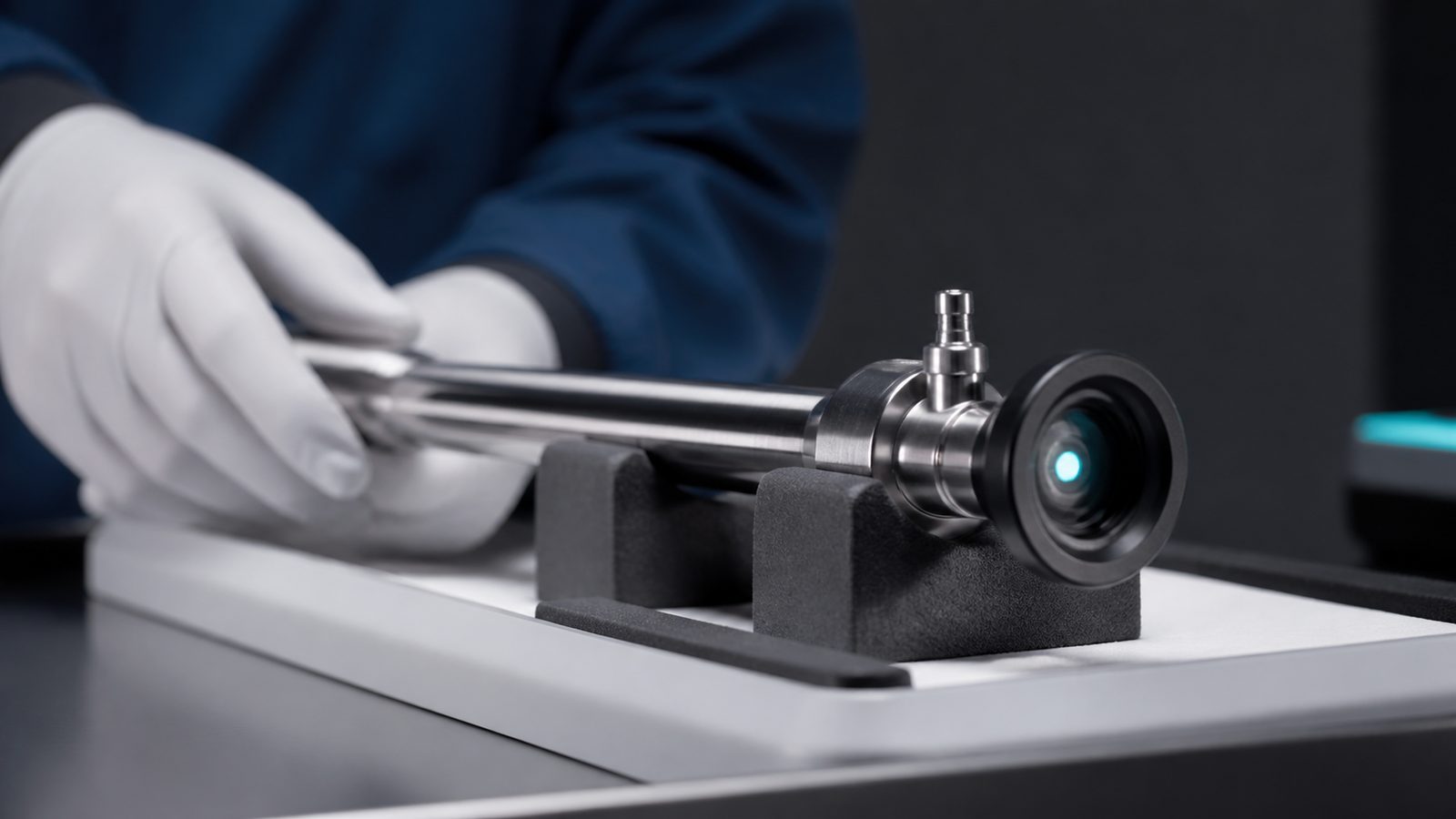
A 0 degree telescope looks straight ahead through a plain window. A 30, 45, or 70 degree telescope does not. It uses a prism at the distal end to bend the field, and that prism has to sit at exactly the angle it was set to. It is glass, it is cemented, and it is the closest optical component to every impact the device takes.
When a prism shifts, the symptom is subtle and surgeons often describe it as the scope feeling wrong rather than looking wrong. The view sits between angles, the horizon does not behave the way it does on the other telescope in the set, and orientation takes longer than it should. Staff sometimes conclude the scope has been mislabeled or that trays have been mixed up.
This is repairable, and it is worth reporting the moment somebody notices, because whatever moved the prism usually chipped the window as well. That is distal lens and window damage, and the two are quoted as one job rather than two visits.
Clinic Handling, Steam Cycling, and Sinuscope Service Life
Every steam cycle takes a sealed telescope from room temperature to well above boiling and back, and the seals at the eyepiece, the light post, and the window expand and contract with it. They hold for hundreds of cycles, then they stop. In ENT the cycle count runs up faster than in most specialties, so seals are a scheduled reality rather than an unusual event.
The first sign is a warm color cast that camera white balance partly hides. The second is a haze that no wipe removes, because the affected glass is inside the shaft. If the device keeps cycling from there, water on hot glass starts to etch the surfaces and a seal replacement becomes a full relay rebuild. It follows the same course as fluid invasion in any sealed scope.
There is no leak test at the point of assembly for a rigid device, so the control is visual. Look through the eyepiece at a bright surface before the telescope goes on the tray. Clear and colorless is fine. Anything else means it does not go back in the drawer, it goes in the repair box. The rigid range we work across includes the Karl Storz ENT telescopes most sinus sets are built around, and we are an independent shop with no manufacturer affiliation.
When an ENT Scope Image Problem Is the Camera or Cable
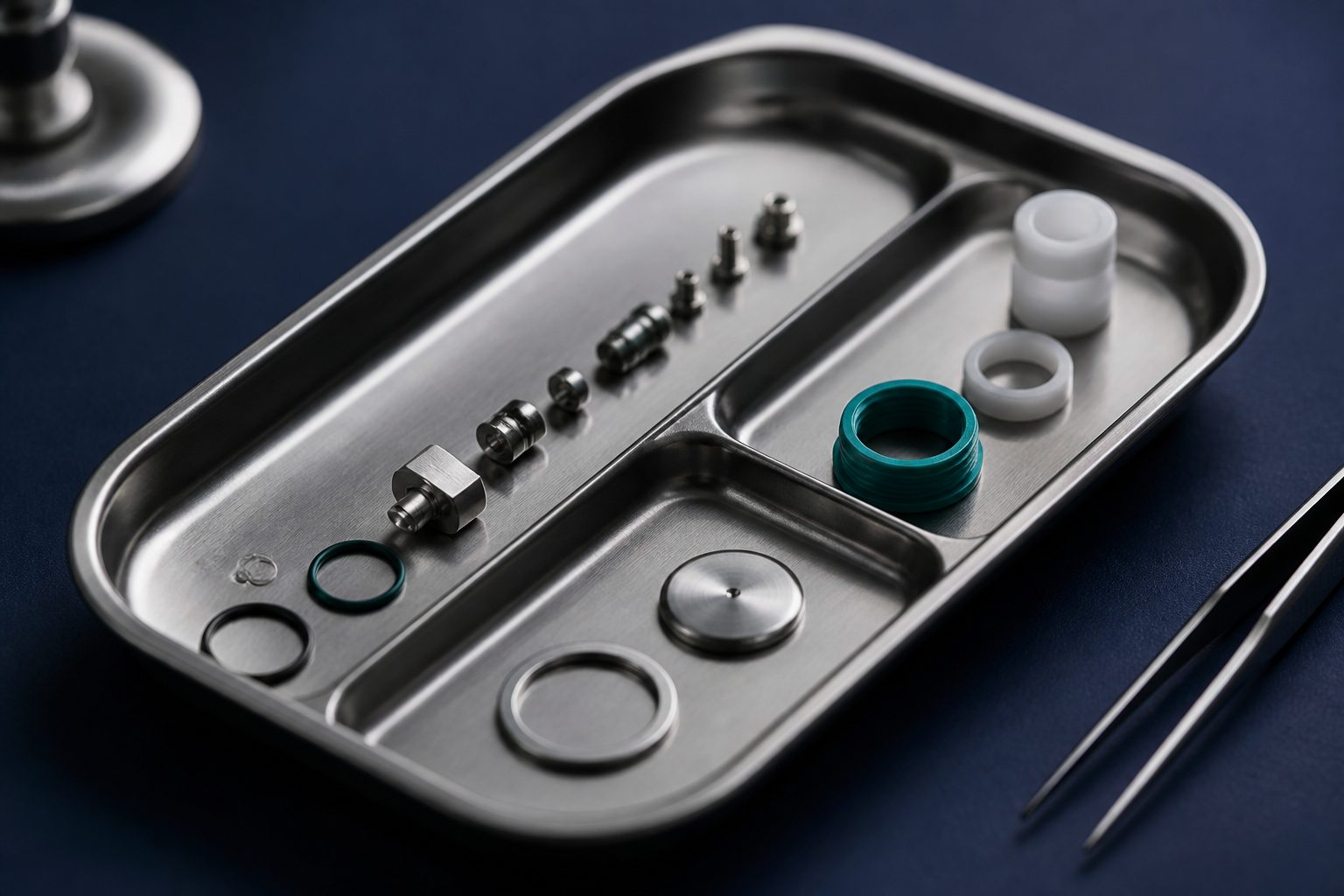
Clinics run a shorter image chain than an OR does, which makes the diagnosis easier if anyone stops to do it. Before condemning a telescope for a dark or discolored picture, change the light cable, then the coupler, then the camera head, and see which swap moves the image. In a fair share of cases the telescope was never the problem.
Light cables in clinic take more abuse than the scopes do. They get coiled tight, pinched in drawers, and pulled by the cable rather than the connector, and they lose fibers steadily without ever looking damaged. That is a fiber optic cable repair, and a color shift on the monitor with a clear direct view through the eyepiece points instead at the camera head and coupler. Where the loss really is inside the telescope, it is illumination bundle work.
Facilities that run several rigid specialties usually batch the pickup. ENT inventory travels with the orthopedic arthroscope set and the general surgery laparoscopy telescopes, which keeps it to one evaluation, one quote sheet, and one return.
How it works
How Sinuscope Service Works, From Pickup to Return
Four steps, and nothing gets replaced until your team has approved the written evaluation.
Tell us what failed
Send the manufacturer, model, and what you are seeing. A photo of the damage helps but is not required.
We collect the scope
Courier pickup across Southern California, or ship the device in to our bench from anywhere in the country.
You get a written quote
We evaluate the device, document the failure, and price the repair. Nothing proceeds until you approve it.
Repaired, tested, returned
The device is repaired, leak and function tested, and returned with documentation for your records.
Questions we get
Sinuscope Repair Questions From SPD and ENT Teams
Our 45 degree telescope does not look like the other one in the set. Is it damaged?
How many telescopes should a busy ENT clinic expect to send for repair?
The image is yellow. Can our staff clean it?
Do you repair 2.7 mm pediatric and office telescopes?
Is the picture problem the scope or the camera?
Other Rigid Scope Repair Pages in This Section
The same rod lens construction and the same steam exposure, working in different anatomy and breaking in different ways.
Get a Free Quote on Your Sinus Telescope Repair
Tell us the manufacturer, the diameter, and the view angle, and describe what the image is doing. We will price the work before anyone opens the device.
Monday to Friday, 8:00 AM to 5:00 PM Pacific
Saturday and Sunday, closed
Mail-in repairs received any day
Serving Southern California with pickup and delivery, and the rest of the country by mail-in.