
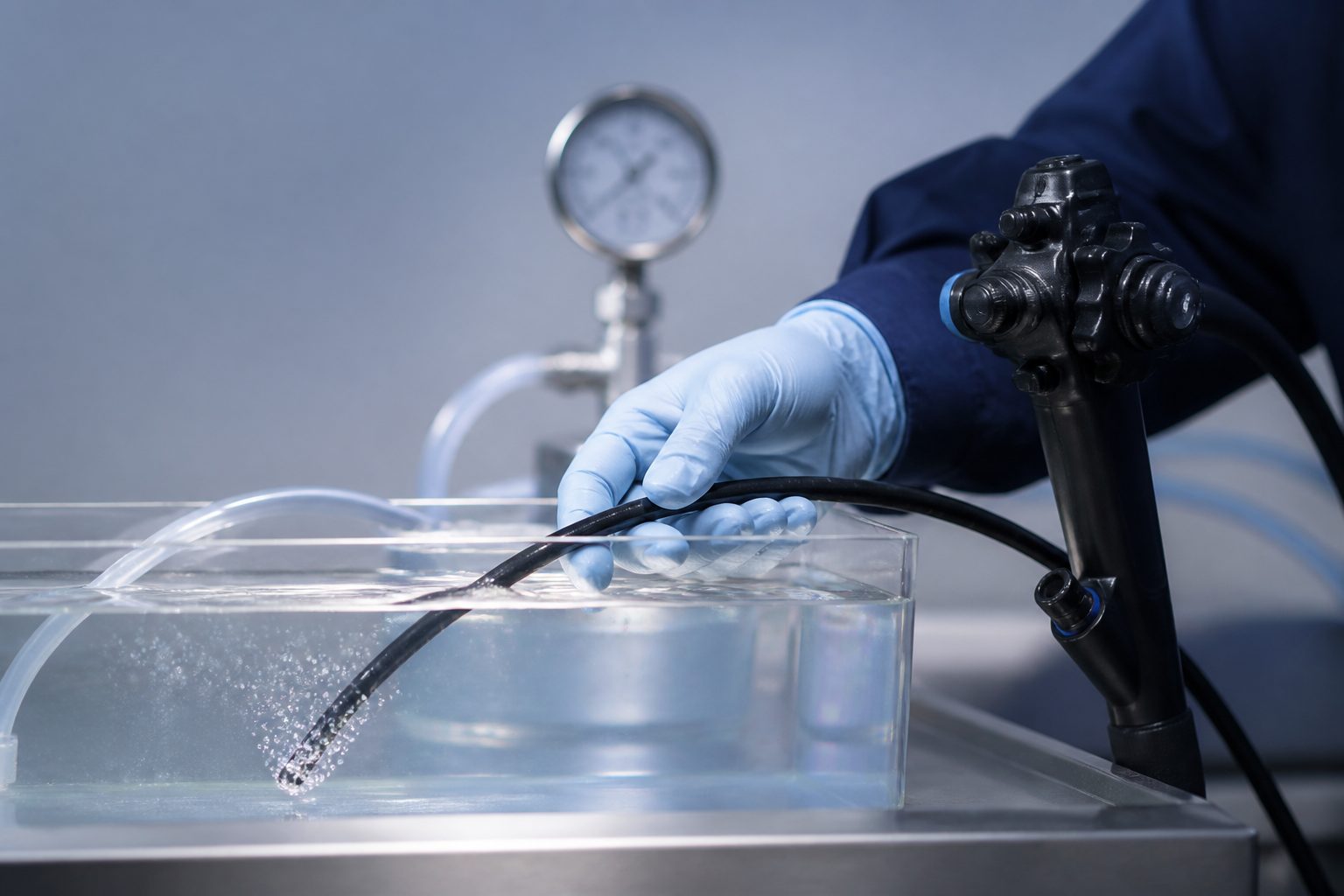
The biopsy port leaks, sticks, or will not seal
Biopsy Port Repair When the Port Leaks, Sticks, or Will Not Seal
The biopsy port is the one part of a flexible scope that gets pushed, twisted, and scraped from the inside on every case. When it stops sealing, the channel behind it has usually been taking damage for longer.
- Port body, seat, and seal rebuilds
- Working channel liner replacement full length
- Free evaluation and a written quote first
- Pickup in Southern California, mail-in nationwide
Get a Free Repair Quote
Tell us what failed and we will send a written quote before any work begins. No charge for the evaluation, and no purchase order needed to get one.
Quote before any work
You approve a written quote before a technician touches the scope.
Free evaluation
We diagnose the failure and price the repair at no charge, even if you decline.
We come and get it
Pickup and delivery across Southern California, mail-in service everywhere else.
Independent, not the OEM
All major manufacturers serviced, without OEM exchange pricing.
Symptom to cause
What a Failing Biopsy Port Is Telling You
A port that leaks, a port that binds, and a port that has lost suction are three separate faults with three separate repairs.
What you see
Fluid or air escapes back out of the port around an accessory during a case
Likely cause
A worn or split biopsy valve, or a port seat that has been scored so the valve no longer seals against it. The valve is consumable, the seat is not.
What we do
Fit new valve components and assess the seat under magnification, then machine or replace the seat where it has lost its sealing surface.
What you see
Accessories bind, catch, or need force to pass through the port entry
Likely cause
A deformed or scored port body, or the top of the channel liner has torn and rolled back into the path.
What we do
Rebuild the port body and replace the upper liner section, then pass a reference accessory to confirm the path is smooth end to end.
What you see
Suction has weakened and the port also leaks when the valve is depressed
Likely cause
Air is being drawn in at the port instead of at the tip. The suction path is intact and the seal is the fault, not the channel.
What we do
Restore the port seal and seat, then measure suction at the tip against specification to confirm the channel run behind it is clear.
What you see
The scope fails a leak test with no external damage anywhere on the tube
Likely cause
The working channel liner has been perforated from the inside by a forceps tip, a stiff guidewire, or a needle. The breach is invisible from both ports.
What we do
Dye and pressure check each channel individually to locate the perforation, then replace the affected liner run and pressure test the rebuilt scope.
What you see
Rough or gritty feel along the channel as an accessory is advanced
Likely cause
The liner surface has been abraded along its length by repeated accessory passage, most often on scopes that run stiff or sharp devices.
What we do
Replace the liner run. An abraded liner cannot be cleaned to protocol and it will keep tearing accessories and seals.
What you see
Scorching, melting, or a burned smell at or near the channel
Likely cause
Thermal damage from a laser fiber or an electrosurgical accessory fired inside or too close to the channel liner.
What we do
Treat as urgent. The liner is replaced and the surrounding structure assessed, because thermal damage travels further than the visible mark.
What Not to Do With a Leaking Port Seal
The port is the easiest part of a scope to work around and the easiest place to do real damage while working around it.
- Do not keep firing a laser fiber or an electrosurgical accessory while its working end is still inside the channel. The liner is polymer and it will melt or char in a fraction of a second, and the damage extends well past the mark you can see. Confirm the working end is clear of the tip before energy is applied.
- Do not force an accessory that binds at the port. Something in the path has deformed, and forcing it either tears the liner further or perforates it. A perforated liner is a breach into the body of the scope that no external inspection will find, and it shows up as a failed leak test with no visible damage.
- Do not run the scope with a valve that is split, missing, or substituted with a part from another model. A port that does not seal draws air in at the wrong end, and it also opens a path for fluid to leave the channel during suction and reach the control body.
- Do not push a stiff accessory through while the tip is at full deflection. The channel takes its tightest radius at the bending section, and that is where a forced tip goes through the wall or strikes the back of the distal optical assembly.
- Do not treat a rough feeling channel as cosmetic. An abraded liner cannot be cleaned to the standard your protocol assumes, so it is an infection prevention question as much as a mechanical one, and it will keep shredding valves and accessory sheaths until it is replaced.
Why the Working Channel Wears From the Inside Out
Every other part of a flexible scope is damaged by the outside world. The working channel is damaged by your own instruments. Biopsy forceps, snares, injection needles, guidewires, baskets, and laser fibers all travel its full length, and every one of them makes contact with the wall at the port entry, at the bending section, and at the exit.
That means channel wear tracks accessory traffic rather than age. A scope that runs diagnostic cases for years can have a liner in good condition, while a therapeutic scope of the same age is on its second liner. It also means the damage is progressive and invisible. Nothing about the outside of the device tells you what the inside looks like.
The port itself is the visible end of that process. When the valve stops sealing, or the entry starts catching accessories, it is usually the first outward sign of wear that has been accumulating down the run. That is why we inspect the whole liner rather than rebuilding the port and returning the scope, and why the other failure modes we handle so often turn up on the same evaluation.
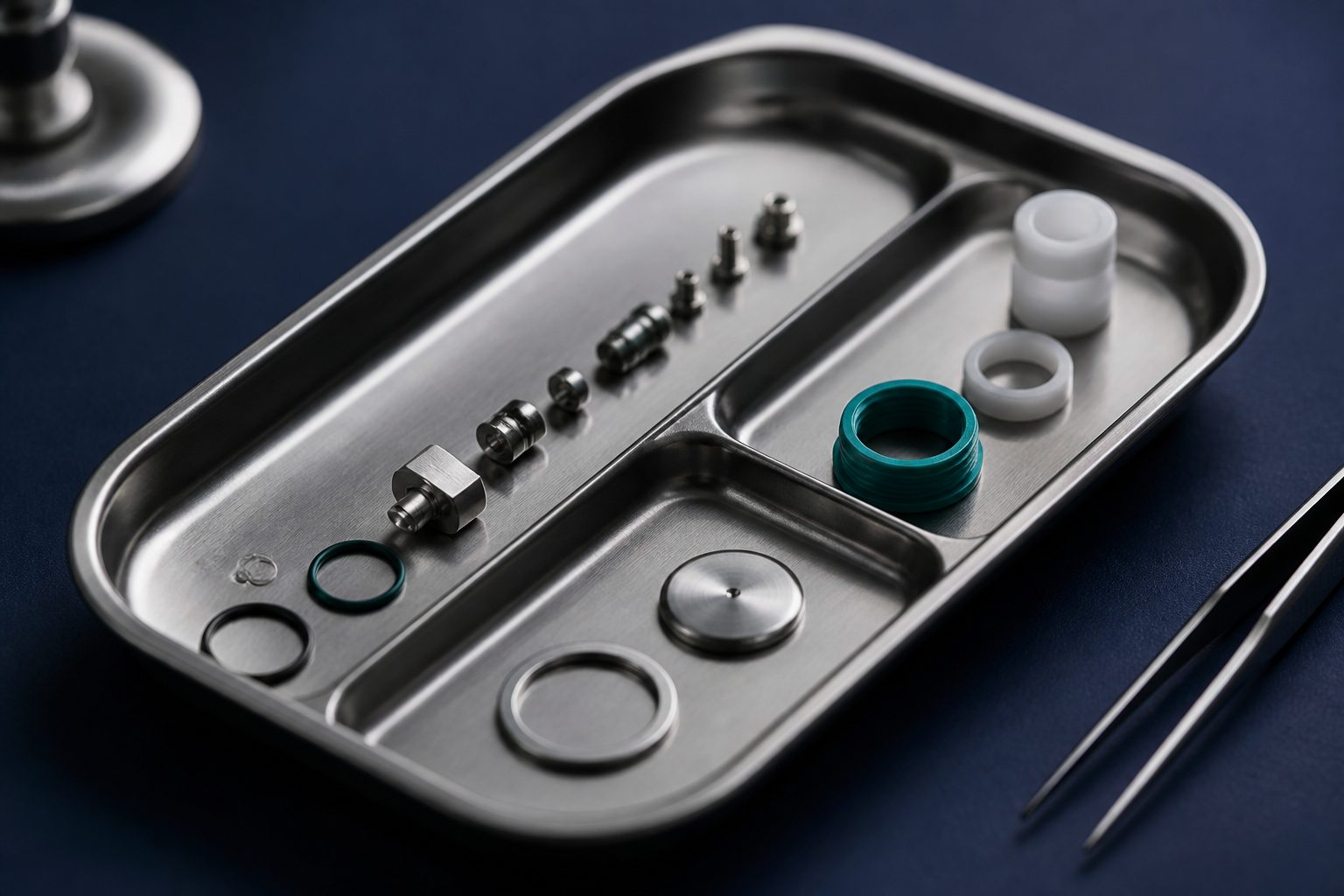
Suction Loss at the Port Versus a Worn Channel Liner
These arrive as the same complaint from the room and they are different repairs, so it is worth separating them before you call. Fit a fresh valve, cover the port properly, and check suction at the tip. If suction returns, the fault was the seal at the port and the channel behind it is fine. That is the small repair.
If suction stays weak with a good valve in place, the restriction is somewhere down the run. That could be deposit, a collapsed section inside a crushed part of the tube, or a liner that has degraded enough to disturb flow. The channel blockage and replacement page covers that side in detail.
There is a third possibility that people miss. If the port leaks and suction is weak, air is being drawn in at the port rather than at the tip, and the channel may be entirely clear. Fixing the seal fixes the suction. Sending the scope for a channel replacement it does not need is a common and avoidable outcome.
How Accessories Damage the Biopsy Port and the Liner Behind It
The damage clusters at predictable points, and knowing them tells you what to describe when you call. The port entry takes the twisting and the scraping. The bending section takes the highest lateral load, because that is where the channel bends tightest and where a stiff accessory pushes hardest against the wall. The exit at the tip takes the strikes from anything advanced too fast.
Thermal damage is its own category and it belongs to urology and to therapeutic GI. A laser fiber fired while the working end is still inside the channel does not scratch the liner, it melts it, and the affected area is larger than the visible mark. Flexible ureteroscope service brings us more of this than anything else, and it is the fastest way to write off an otherwise sound scope.
Perforation is the quiet one. A forceps tip or a stiff wire that catches on a liner ridge can go through the wall without any resistance the operator would feel. There is no external sign, the ports both look normal, and the only evidence is a leak test that fails on a device nobody dropped.
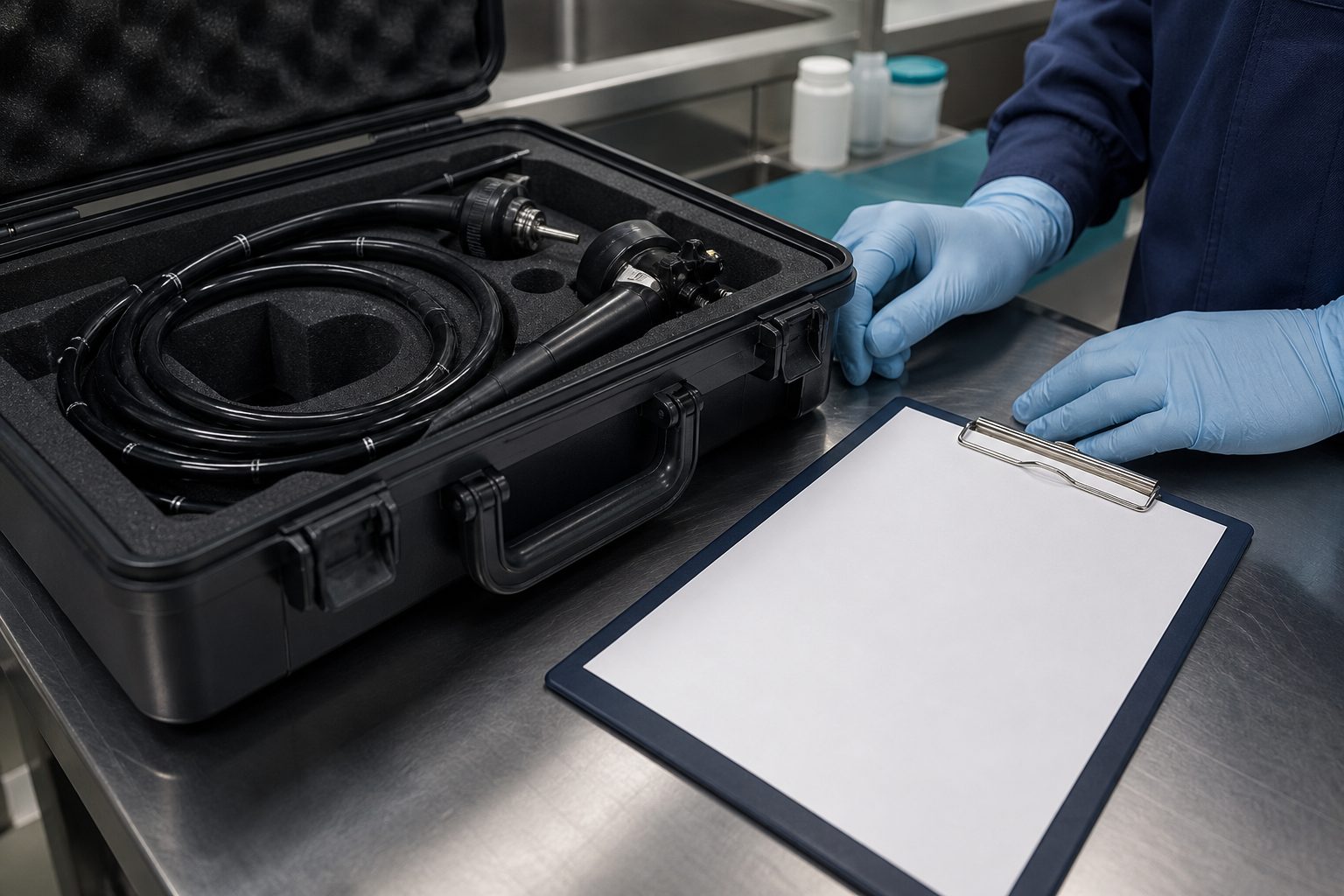
What Port Repair and Liner Replacement Restore
Every scope with a port or channel complaint gets a full leak test at intake, then a channel by channel patency and flow check, then a liner inspection along the run rather than a look at the ports. We pass a reference accessory to reproduce what your staff described, because a port that feels fine empty can still bind under an instrument.
The repair scales with what the inspection shows. Some devices need valve components and a seat restoration in the port body and nothing more. Others need the liner run replaced, which is longer work and is quoted plainly, because a scope with an abraded or perforated liner should not go back into rotation on a rebuilt port alone. All of it is standard flexible endoscope service, and the device is pressure tested again before it ships back.
The devices we see most for this are the ones carrying the heaviest therapeutic traffic. Colonoscope repair leads on accessory wear, and bronchoscope work follows because a small diameter channel has very little wall to give away.
How it works
How Working Channel and Port Repair Works on Our Bench
The liner gets inspected along its full run, not just at the entry, because the entry is rarely where the damage ends.
Tell us what failed
Send the manufacturer, model, and what you are seeing. A photo of the damage helps but is not required.
We collect the scope
Courier pickup across Southern California, or ship the device in to our bench from anywhere in the country.
You get a written quote
We evaluate the device, document the failure, and price the repair. Nothing proceeds until you approve it.
Repaired, tested, returned
The device is repaired, leak and function tested, and returned with documentation for your records.
Questions we get
Biopsy Valve Questions From Endoscopy and SPD Teams
The port leaks around the forceps. Is that the valve or the scope?
Can a damaged working channel cause a leak test failure?
Suction is weak. Do we need a new channel or a port repair?
A laser was fired inside the channel. Is the scope finished?
The channel feels rough when accessories pass. Is that worth repairing?
How often should a working channel liner be replaced?
Other Flexible Endoscope Faults That Start in the Channel
Everything that passes through the working channel eventually shows up somewhere else on the scope. These are the usual destinations.
Leak Testing
The scope fails a leak test in reprocessing
Fluid Invasion
Fluid has entered the scope body or control section
Cracked Distal Lens
The image is starred, hazy, or partially blacked out
Bent Insertion Tube
The insertion tube is kinked, buckled, or will not straighten
Angulation Loss
The tip will not reach full deflection or feels loose
Dim Illumination
The field is dim even at full light source output
Channel Blockage
Air or water will not pass, or insufflation is weak
Get a Quote on Biopsy Port Repair
Tell us the manufacturer, the model, and whether the port leaks, binds, or has lost suction. Include what accessories the scope runs.
Monday to Friday, 8:00 AM to 5:00 PM Pacific
Saturday and Sunday, closed
Mail-in repairs received any day
Serving Southern California with pickup and delivery, and the rest of the country by mail-in.