
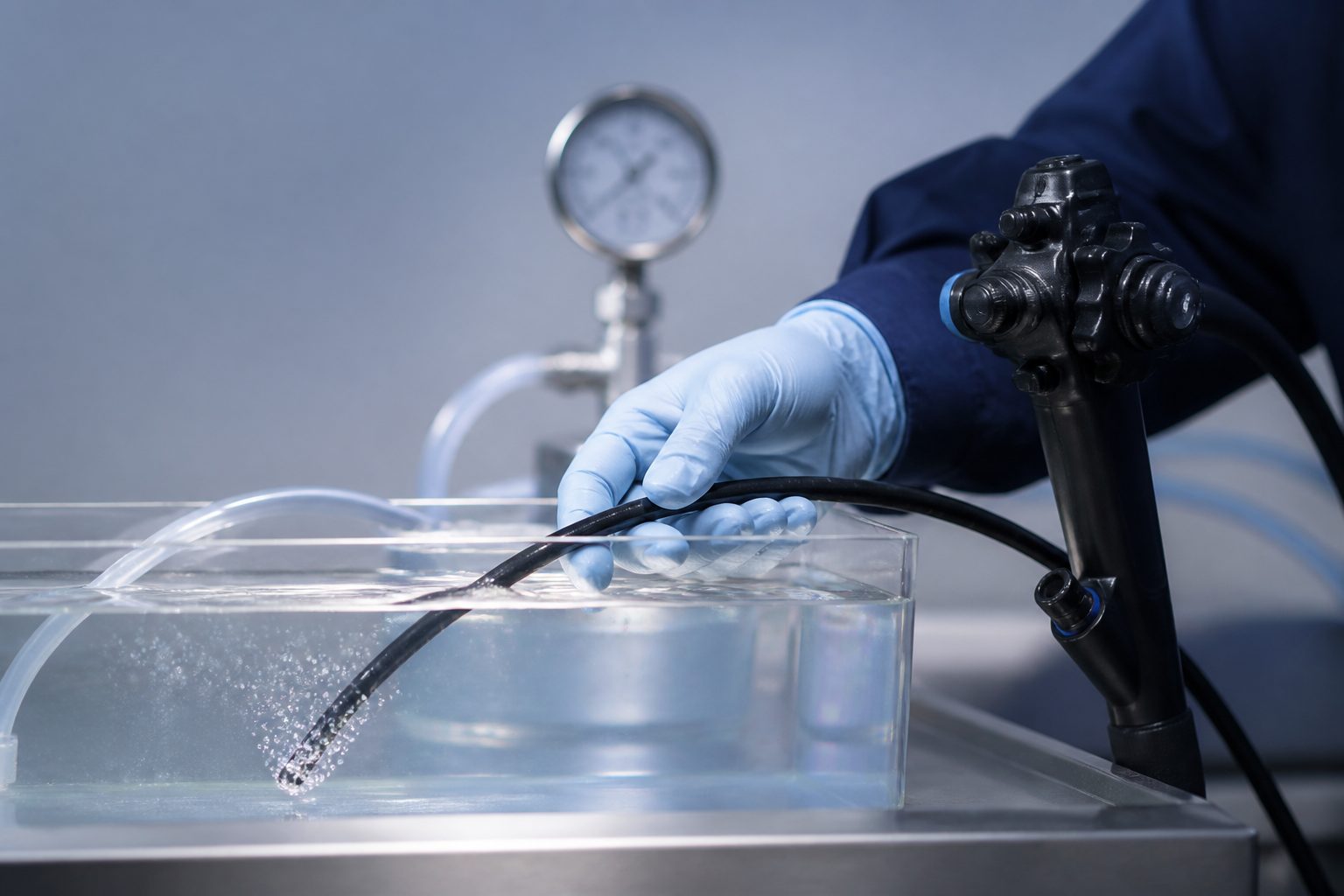
Air or water will not pass, or insufflation is weak
Endoscope Channel Replacement When Air or Water Will Not Pass
Weak insufflation and a lens wash that will not clear are usually treated as a cleaning problem. Sometimes they are. The rest of the time the liner or the valve seat has failed, and pressure will not fix either one.
- Air, water, suction, and working channel repair
- Valve seat machining and cylinder service
- Free evaluation and a written quote first
- Pickup in Southern California, mail-in nationwide
Get a Free Repair Quote
Tell us what failed and we will send a written quote before any work begins. No charge for the evaluation, and no purchase order needed to get one.
Quote before any work
You approve a written quote before a technician touches the scope.
Free evaluation
We diagnose the failure and price the repair at no charge, even if you decline.
We come and get it
Pickup and delivery across Southern California, mail-in service everywhere else.
Independent, not the OEM
All major manufacturers serviced, without OEM exchange pricing.
Symptom to cause
What a Channel Blockage Is Telling You
Which line is affected, and whether flow is weak or absent, separates a debris problem from a mechanical one.
What you see
Air insufflation is weak but the water jet still washes the lens normally
Likely cause
A partial restriction in the air line or a worn air and water valve that is bleeding pressure past its seat instead of directing it.
What we do
Test both lines under measured pressure, service or replace the valve and its seat, and replace the air line where the restriction is in the channel itself.
What you see
Neither air nor water passes, and the valve feels normal in the cylinder
Likely cause
A shared blockage upstream of the split, most often dried protein and salts that were never fully flushed after a case.
What we do
Clear and inspect the shared run, verify flow against specification on both lines, and replace the section where the deposit has bonded to the liner.
What you see
Flow was restored by flushing but returns to weak within a few cases
Likely cause
Biofilm and mineral scale on a roughened liner surface. A rough liner reseeds far faster than a smooth one, so cleaning buys days rather than months.
What we do
Replace the affected channel run. A liner that has lost its surface will keep failing regardless of how carefully it is reprocessed.
What you see
The valve sticks, sits high, or leaks around the cylinder during a case
Likely cause
A worn or scored valve seat and cylinder rather than a channel fault. Seat wear is the single most common cause of poor insufflation we find.
What we do
Machine or replace the valve seat and cylinder, fit new valve components and seals, and confirm the line holds and releases cleanly under pressure.
What you see
Suction has weakened while air and water are unaffected
Likely cause
Deposit in the suction and working channel, a worn suction valve seat, or a liner that has partly collapsed inside a crushed section of tube.
What we do
Inspect the suction run its full length, replace the collapsed or scaled section, and service the suction valve seat at the same time.
What you see
Flow dropped off immediately after the insertion tube was crushed or kinked
Likely cause
A flattened or split liner inside the deformed section. There is often no external sign beyond the original damage.
What we do
Repair the tube and the channel run together, then confirm patency and measured flow on every line before the scope is reassembled.
What Not to Do With a Blocked Scope Channel
A restricted channel and a compromised channel look identical from the valve end. Only one of them tolerates pressure.
- Do not force a blocked channel clear with pressurized air or a syringe under hard pressure. A channel that is blocked may also be compromised, and the deposit is often the only thing holding a weakened liner together. Pressure ruptures it into the interior of the scope, which turns a channel job into a leak and then into fluid damage.
- Do not push a wire, a guidewire, or any stiff instrument down a channel to clear it. Channel liners are thin polymer, and the moment a stiff tip catches on a deposit ridge it perforates the wall. That perforation is invisible from both ports and shows up later as a failed leak test nobody can explain.
- Do not run a solvent, a descaler, or any chemistry not validated for the device down a channel to dissolve a blockage. Unvalidated chemistry attacks the liner and the bonded joints at the ports, and residue left in a patient channel is a much larger problem than weak insufflation.
- Do not put a scope with a suspected channel breach through another reprocessing cycle. If the liner has opened into the body of the scope, the reprocessor is now pumping fluid and chemistry straight into the interior. Leak test first and read the fluid invasion guidance before deciding.
- Do not keep returning a scope to service after each flush restores flow temporarily. Flow that comes back and then fades again is a liner surface problem, not a cleaning problem, and every cycle in between is being performed on a channel you cannot fully clean.
Why Forcing a Blocked Scope Channel Can Rupture the Liner
A channel liner is a thin walled polymer tube bonded at both ends and supported along its run by the structure of the insertion tube. It is built to carry flow and to pass accessories, not to hold pressure against a closed end. A blockage turns it into exactly that: a sealed vessel with a syringe on one side of it.
Worse, the deposit that is blocking the line is frequently sitting on a section of liner that is already degraded, because rough and damaged liner surfaces are where deposits form first. So the pressure lands precisely where the wall is weakest. When it lets go, it lets go into the body of the scope rather than out the far port, and nothing about that is visible from either end.
That is how a facility ends up with a scope that has a channel blockage on Monday and a fluid invasion on Wednesday. The blockage was survivable. The response to it was not. The same sequence appears on several of the failure modes on this site, and it is the reason the warnings above are written as flatly as they are.
Where Air and Water Flow Actually Stops Inside a Scope
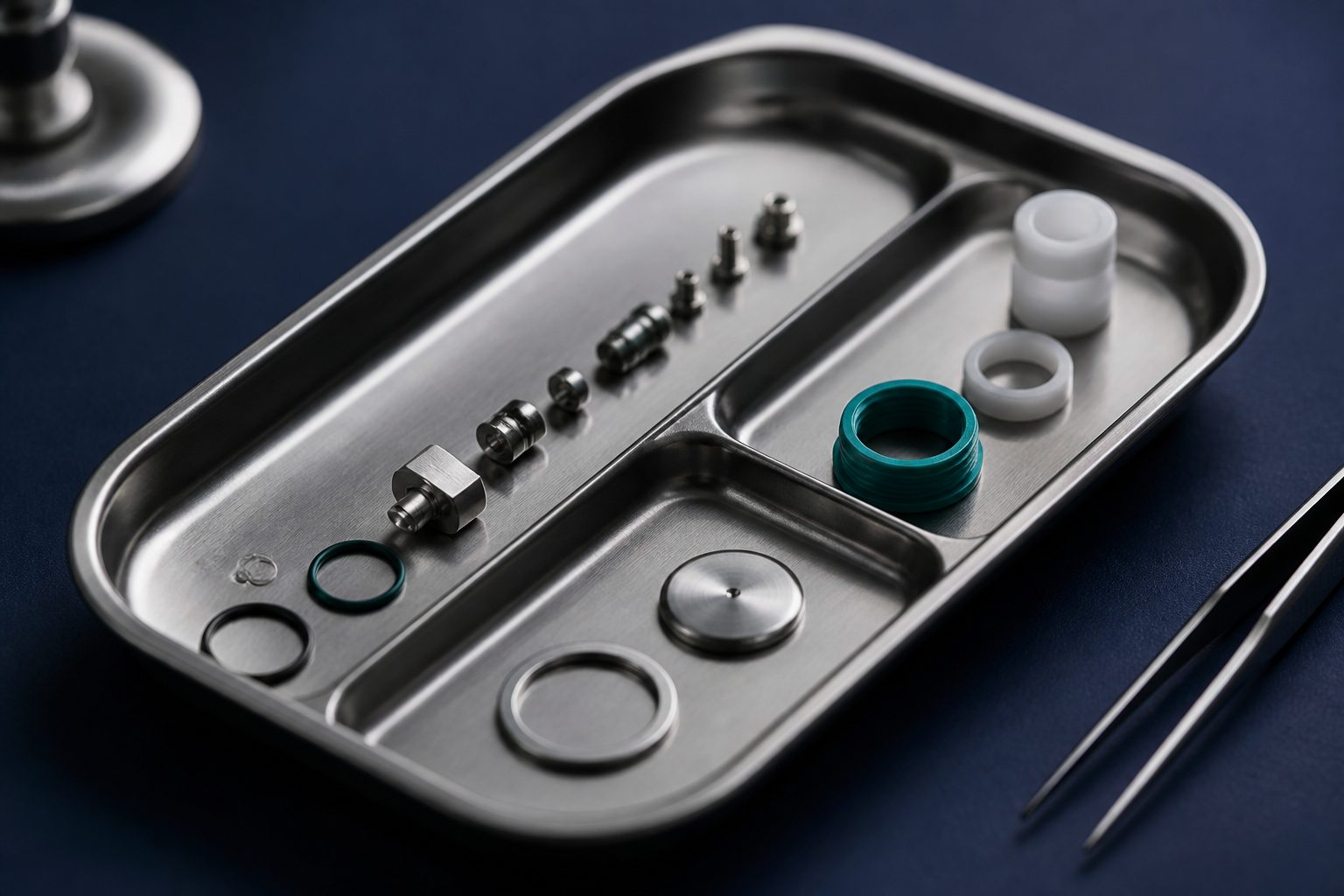
The path is longer and more mechanical than the symptom suggests. Air comes from the pump, through the umbilical, to the valve cylinder in the control body, past the valve seat, into the air line, down the full insertion tube, and out the nozzle beside the objective. Water follows most of the same path from the bottle. Both finish at a nozzle small enough that a single dried droplet will disturb it.
Any of those stages can be the fault, and the two most common are the two people check last: the valve seat in the control body and the nozzle at the tip. A worn seat bleeds pressure without ever fully blocking, which produces the classic complaint of insufflation that is present but weak. A partly occluded nozzle produces a water jet that misses the lens rather than one that stops.
That is why the useful information when you call is which lines are affected rather than a description of the blockage. Air weak with water normal is a different investigation from both dead. Suction weak with air and water normal points somewhere else again, and often at the working channel and biopsy port rather than at the air and water side.
Valve Seat Wear Versus Channel Liner Failure
These two account for most of what we open, and they are easy to tell apart on a bench and almost impossible to tell apart in a department. A worn valve seat is a machining problem in the control body. The channels themselves are fine, the repair is contained, and full function comes back the day the seat and the valve components are replaced.
A failed liner is a length problem. It runs the whole insertion tube, so replacement means opening the scope along its run rather than working in the control body. It is the larger job, and it is the one that has to be done properly, because a liner that is scaled, roughened, or perforated cannot be cleaned to the standard your reprocessing protocol assumes it can.
That distinction matters beyond the invoice. A channel that will not come clean is an infection prevention question as much as a mechanical one, and it is the reason we replace liners rather than clean them when the surface is gone. Departments running heavy duodenoscope reprocessing already know this conversation well.
What Channel Replacement Restores Beyond Flow
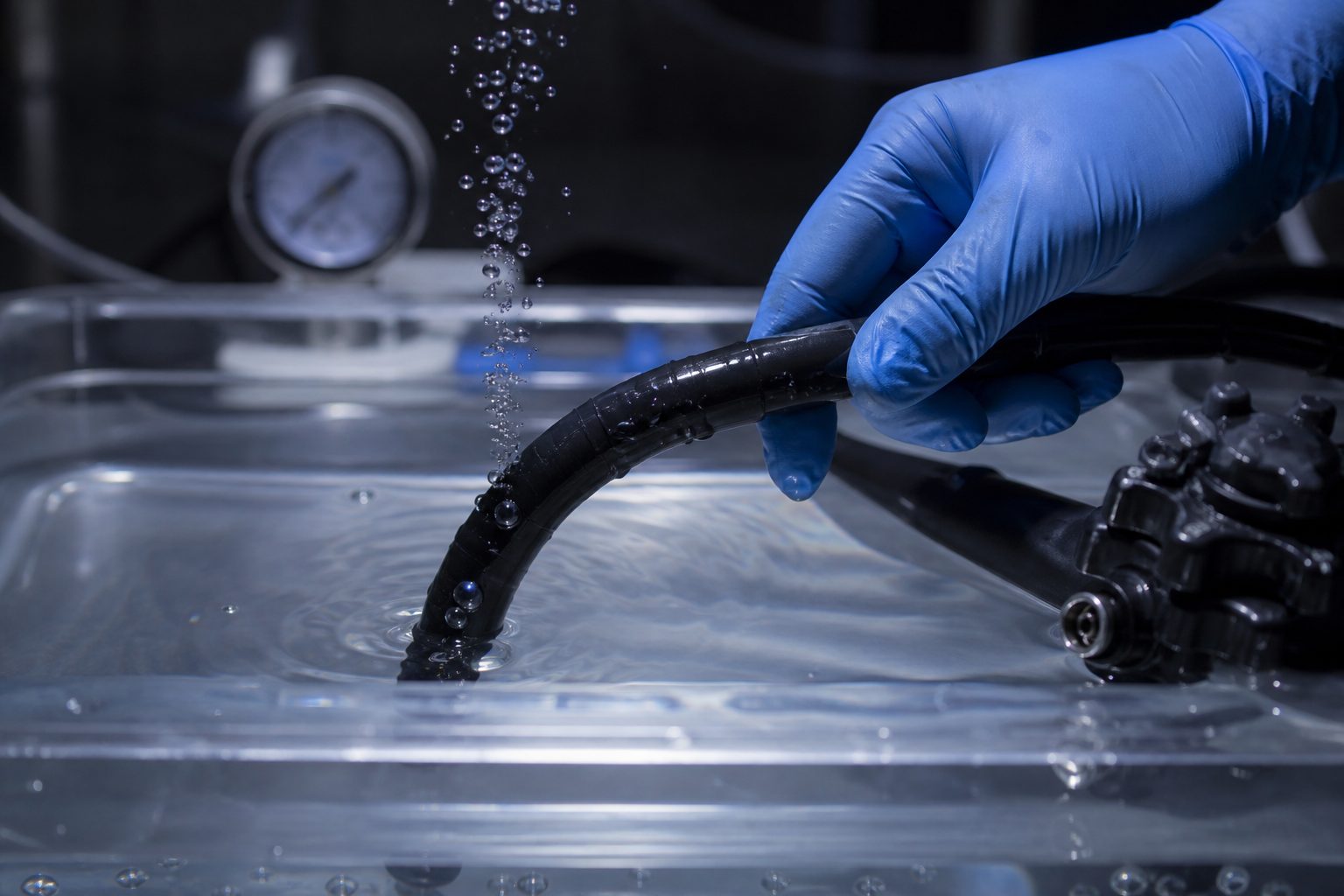
Every scope that arrives with a flow complaint gets each line tested separately under measured pressure, along with a full leak test at intake. We inspect the liner surface along its run rather than looking at the ports, and we assess the valve seats and cylinders as part of the same evaluation, because the two so often arrive together.
The quote separates the lines that are restrictions from the lines that are compromised. Some scopes need a valve seat and nothing more. Some need a full channel run replaced, and where that is the case we will say so plainly rather than sell you a clearance that lasts three weeks. That is normal flexible scope service, and the device is leak tested again after reassembly.
High volume colonoscope work produces most of the channel jobs we quote, simply because those devices run the most cases and see the most accessory traffic. If the flow complaint started right after a crush event, read the insertion tube damage page as well, because the channel is usually not the only thing that got flattened.
How it works
How Air and Water Channel Repair Works on Our Bench
Flow is measured line by line, and the liner is inspected along its length rather than judged from the ports.
Tell us what failed
Send the manufacturer, model, and what you are seeing. A photo of the damage helps but is not required.
We collect the scope
Courier pickup across Southern California, or ship the device in to our bench from anywhere in the country.
You get a written quote
We evaluate the device, document the failure, and price the repair. Nothing proceeds until you approve it.
Repaired, tested, returned
The device is repaired, leak and function tested, and returned with documentation for your records.
Questions we get
Channel Blockage Questions From Sterile Processing Teams
Can we flush a blocked channel with pressure to clear it before sending the scope?
Flow comes back after a thorough clean but fades again after a few cases. Why?
Air is weak but the lens wash is fine. Is that still a channel repair?
Could a channel blockage cause a leak test failure?
Do you replace the whole channel or only the blocked section?
Is a channel that will not come clean an infection prevention issue as well as a repair issue?
Other Flexible Endoscope Channel Faults We Repair
The lines inside a scope share a run and share their failure modes. These are the ones that arrive alongside this one.
Leak Testing
The scope fails a leak test in reprocessing
Fluid Invasion
Fluid has entered the scope body or control section
Cracked Distal Lens
The image is starred, hazy, or partially blacked out
Bent Insertion Tube
The insertion tube is kinked, buckled, or will not straighten
Angulation Loss
The tip will not reach full deflection or feels loose
Dim Illumination
The field is dim even at full light source output
Biopsy Port
The biopsy port leaks, sticks, or will not seal
Get a Quote on Endoscope Channel Replacement
Tell us which lines are affected, whether flow is weak or absent, and what has already been tried on the device.
Monday to Friday, 8:00 AM to 5:00 PM Pacific
Saturday and Sunday, closed
Mail-in repairs received any day
Serving Southern California with pickup and delivery, and the rest of the country by mail-in.